

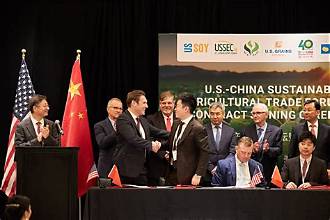
U.S. soybean futures moved higher after news emerged that Chinese buyers had signed agreements to purchase U.S. soybeans, raising expectations for stronger export demand and providing fresh support to the American oilseed market. The development came during a U.S. soybean industry event, where details of the purchase commitments helped improve market sentiment.
China is the world’s largest soybean importer and plays a critical role in global soybean trade. Because of its enormous demand for soybeans, any increase in Chinese purchases from the United States can have a significant impact on prices, export expectations and farmer sentiment. The latest agreements therefore attracted close attention from traders and agricultural market participants.
The rise in soybean futures reflects expectations that the new purchase agreements could contribute to improved U.S. export prospects. Soybeans are one of the most important agricultural commodities exported by the United States, with China traditionally representing a major destination for American supplies. Stronger Chinese buying can help support prices by reducing concerns about excess domestic inventories and improving demand expectations.
The agreements also come at an important time for the U.S. soybean sector. American farmers are closely monitoring international demand, crop conditions, weather developments and global competition as they prepare for the next stages of the marketing season. Export sales to major buyers such as China are particularly important because they provide greater visibility for future demand.
Market analysts and traders are likely to watch whether the reported agreements translate into sustained buying activity. A single round of purchases can provide short-term support, but continued orders from China could have a more lasting influence on the soybean market. Export inspections, weekly sales data and future announcements from Chinese importers will therefore remain important indicators for the market.
The development could also influence global soybean trade flows. The United States competes with major producers such as Brazil and Argentina for access to international markets. Brazil has become an increasingly important supplier to China, making competition for Chinese demand a key factor in the global soybean market. Renewed purchases of U.S. soybeans could provide American exporters with an opportunity to strengthen their position in the Chinese market.
Soybean prices are also influenced by factors beyond international trade. Weather conditions in major producing regions, changes in biofuel demand, currency movements, planting decisions and global economic conditions can all affect prices. As a result, traders will continue to assess the China purchase agreements alongside broader market fundamentals.
For U.S. farmers, stronger Chinese demand could provide a welcome boost by improving export prospects and potentially supporting farm-gate prices. However, the long-term impact will depend on the scale and frequency of future purchases.
Overall, the fresh agreements with China have injected optimism into the U.S. soybean market. The immediate rise in soybean futures suggests that traders view the purchases as a positive signal for export demand. If Chinese buying continues, it could provide additional support to U.S. soybean prices and strengthen the outlook for American agricultural exports in the months ahead.


 By
By











