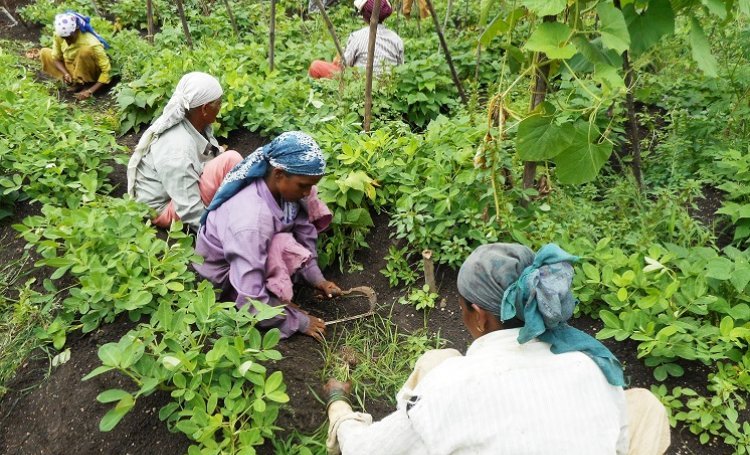
In the heart of Jharkhand, women farmers are leading a quiet revolution transforming barren land into fertile farms, adopting sustainable agricultural practices, and reshaping the rural economy with resilience and innovation. Across districts like Bokaro, Ranchi, Hazaribagh, and East Singhbhum, women are emerging as torchbearers of regenerative farming, supported by a blend of government schemes, community initiatives, and their own determination.
In Kathal Tola village of Bokaro’s Kasmar block, tribal women have turned once-barren hills into flourishing mango orchards under the Birsa Harit Gram Yojana and MGNREGS. With technical and financial support from JSLPS and NGOs, these women began planting saplings in 2015. Today, their farmer-producer company, Grameen Harit Kranti, not only sells over 15 quintals of mangoes annually but also cultivates vegetables and sweet potatoes, generating incomes of up to ₹55,000 per woman per year.
Rural women in Ranchi district are also actively participating in sustainable agriculture. In the Chanho block’s Raghunathpur panchayat, the state agriculture department has distributed seeds, tractors, and ducklings to women’s self-help groups as part of a Kharif seed distribution program. Over 3,400 farmers have benefited from nearly 647 quintals of seeds distributed between late June and early July. This initiative, led by Agriculture Minister Shilpi Neha Tirkey, is designed to promote awareness about modern farming and ensure active involvement of women in agriculture.
In Hazaribagh’s Khaira village, the Farmers Field School, set up in 2016 with the support of JSLPS and local NGOs, has become a hub of learning for more than 3,500 women. Spread over five acres, the school combines classroom education with hands-on training in organic farming, composting, and natural soil enrichment, giving women the tools to farm efficiently and sustainably.
In East Singhbhum’s Ghatshila block, Aloka Rani Mahato from Tamakpal village exemplifies how regenerative farming can empower individuals. Through the JOHAR project, she adopted solar-powered irrigation and modern cultivation techniques. Her success with cabbage and moong farming has inspired others, and she now trains fellow women farmers, acting as a community-level resource person.
These stories are not isolated. Across Jharkhand, initiatives like Palash, the rural enterprise platform under JSLPS, are helping women venture into value-added agri-business—producing pickles, millet-based foods, textiles, and honey. These efforts are enabling rural women to become entrepreneurs, gain financial independence, and assume leadership roles in their communities.
Together, these initiatives are building a new agricultural narrative for Jharkhand—one where women are not just cultivators but innovators and changemakers. Through regenerative farming, they are reviving the land, securing livelihoods, and setting a powerful example for inclusive and sustainable rural development.

 By
By