

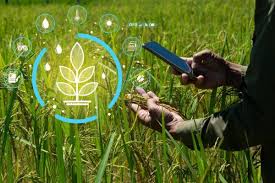
The Government of India has undertaken a comprehensive set of initiatives to accelerate the growth of agritech startups and promote advanced and emerging technologies—such as Artificial Intelligence (AI), precision farming, drones, and climate-smart agriculture—across States and Union Territories. These efforts are designed to modernize Indian agriculture, enhance productivity, improve resource efficiency, and increase farmer incomes.
A major pillar of this strategy is the “Innovation and Agri-Entrepreneurship Development” programme, implemented since 2018-19 under the Rashtriya Krishi Vikas Yojana (RKVY). The programme supports agritech startups by providing financial assistance and nurturing a countrywide incubation ecosystem. Six Knowledge Partners (KPs) and twenty-four RKVY Agribusiness Incubators (R-ABIs) have been engaged to select, incubate, and support startups.
Under this scheme, startups at the idea or pre-seed stage are eligible for funding up to Rs 5 lakh, while seed-stage startups may receive up to Rs 25 lakh in two installments based on recommendations of the Selection and Investment Committee. To date, more than 6000 agritech startups have been trained, and 2096 startups have received technical and financial assistance amounting to Rs 168.14 crore.
Startups are developing solutions in precision agriculture, AI, IoT, ICT, drones, farm mechanization, post-harvest management, food technology, supply chains, agricultural logistics, green energy, and allied sectors.
To promote drone adoption in agriculture, the government provides up to 100% financial assistance (maximum Rs 10 lakh per drone) for ICAR institutions, KVKs, SAUs, and other government agencies. Support is also provided to FPOs, cooperatives, entrepreneurs, and individual farmers under the Sub-Mission on Agricultural Mechanization (SMAM). Drone procurement subsidies range from 40% to 75%, depending on the beneficiary category.
The government has also approved the “Namo Drone Didi” scheme (2023-24 to 2025-26) with an outlay of Rs 1261 crore to provide 15,000 drones to women Self-Help Groups (SHGs). The objective is to improve operational efficiency, increase crop yields, reduce costs, and empower SHGs as rural drone service providers. So far, 1094 drones have been distributed, including 500 under this scheme.
Other major initiatives include:
• Per Drop More Crop (PDMC)—supporting micro-irrigation with subsidies of 55% for small and marginal farmers and 45% for others.
• Prime Minister Fasal Bima Yojana (PMFBY)—leveraging technology through the National Crop Insurance Portal, mobile applications, and digital monitoring of crop-cutting experiments.
• Establishment of four Farm Machinery Training and Testing Institutes to train farmers, technicians, women, and rural youth.
To build a strong digital ecosystem, the government has launched the Digital Agriculture Mission, envisioning a national-level Digital Public Infrastructure (DPI) for agriculture, including Agristack, a decision-support system, and a comprehensive soil fertility and profile map. This DPI will enable faster, reliable, farmer-centric digital solutions and support timely, data-backed decision-making across the sector.
The Mahalanobis National Crop Forecasting Centre (MNCFC) plays a key role in using satellite and geospatial technologies for crop forecasting, drought monitoring, and supporting PMFBY implementation through yield estimation systems and technology integration.
Together, these initiatives signal India’s commitment to a future-ready agricultural ecosystem driven by innovation, digital transformation, and farmer empowerment.


 By
By











