

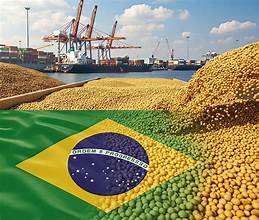
Brazil continues to reinforce its status as the world’s largest soybean producer, achieving another year of strong harvests and robust export performance. Driven by favorable growing conditions, technological advancements, and rising international demand, the country’s soybean sector remains a dominant force in global agricultural markets.
Soybeans are among the most important agricultural commodities traded worldwide, serving as a key source of protein for animal feed and a major raw material for vegetable oil production. Brazil’s growing influence in this sector has significantly transformed global trade flows and strengthened its role in international food and feed supply chains.
The country’s latest soybean harvest has reached record levels, supported by expanded cultivation areas and improved farm productivity. Brazilian farmers have increasingly adopted modern agricultural practices, including precision farming technologies, advanced seed varieties, and improved crop management techniques. These innovations have helped boost yields and maintain competitiveness in global markets.
A major driver of Brazil’s soybean success is strong demand from international buyers, particularly from China. China remains the world’s largest soybean importer, relying heavily on imported soybeans to meet the needs of its livestock, poultry, and food processing industries. Brazilian exporters have benefited from this sustained demand, with shipments to Asian markets continuing at a strong pace.
Industry analysts note that Brazil’s expanding soybean production is reshaping global trade patterns. Over the past decade, the country has increased its share of international soybean exports, challenging traditional market dynamics and strengthening its position as a leading supplier. Investments in transportation infrastructure, including ports, highways, and rail networks, have also improved the efficiency of moving soybeans from inland production regions to export terminals.
The growth of Brazil’s soybean industry has generated significant economic benefits. Soybean exports contribute substantially to national export earnings, support rural employment, and stimulate investment across agricultural value chains. From seed suppliers and machinery manufacturers to logistics providers and processing industries, numerous sectors benefit from the continued expansion of soybean production.
At the same time, experts emphasize that the industry faces several challenges. Weather variability, including droughts and excessive rainfall, remains a key risk for producers. Fluctuations in global commodity prices, currency movements, and changing trade policies can also influence profitability and export competitiveness. Additionally, sustainability and environmental concerns continue to attract attention as agricultural expansion progresses in some regions.
Agricultural researchers and policymakers are increasingly promoting sustainable production practices to balance economic growth with environmental stewardship. Efforts are underway to improve resource efficiency, encourage responsible land management, and enhance climate resilience across soybean-producing areas.
Global demand for soybeans is expected to remain strong in the coming years, driven by growing consumption of meat, poultry, dairy products, and vegetable oils. Demand from the biofuel sector is also creating new opportunities for oilseed producers worldwide. As a result, Brazil is well positioned to maintain its leadership role in the global soybean market.
With record harvests, expanding export capacity, and continued investment in agricultural innovation, Brazil’s soybean sector is expected to remain a critical pillar of global food and feed supply. The country’s growing influence is likely to shape international agricultural trade patterns for years to come, reinforcing its importance in meeting rising global demand for agricultural commodities.


 By
By











