

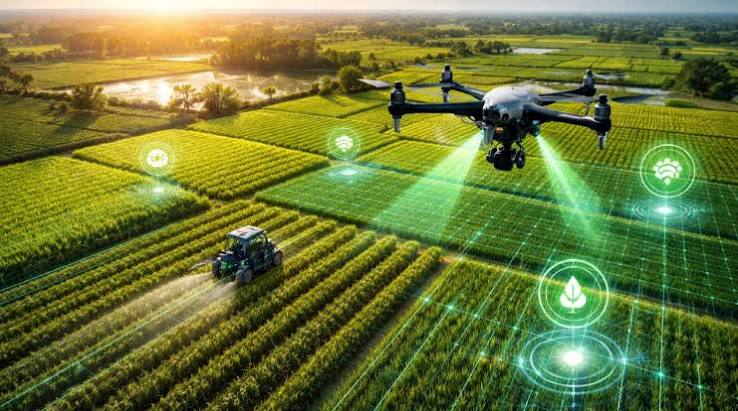
The global adoption of advanced digital agriculture platforms is accelerating as farmers increasingly embrace artificial intelligence (AI), precision farming, and smart monitoring technologies to improve productivity and resource efficiency. New integrations between digital farm management platforms and advanced monitoring systems are enabling growers to make faster, more informed decisions on irrigation, crop protection, and nutrient management.
Agricultural technology companies are developing comprehensive digital ecosystems that combine satellite imagery, drones, Internet of Things (IoT) sensors, weather forecasting, and AI-powered analytics into a single platform. These technologies provide farmers with real-time insights into field conditions, helping them optimize farm operations while reducing production costs.
One of the most significant advancements is the use of AI-driven decision support systems. By analyzing large volumes of data collected from weather stations, soil sensors, crop imagery, and historical field records, these systems can generate recommendations for irrigation scheduling, fertilizer application, pest management, and harvesting. This allows farmers to respond quickly to changing field conditions and improve overall crop performance.
Precision irrigation has become a major application of digital agriculture. Smart irrigation platforms monitor soil moisture, rainfall forecasts, crop water requirements, and evaporation rates to recommend the right amount of water at the right time. This approach not only conserves water but also helps improve crop yields, particularly in regions facing increasing water scarcity.
Digital agriculture is also transforming crop disease forecasting. AI models can analyze weather patterns, humidity levels, temperature, and crop growth stages to predict the likelihood of disease outbreaks before visible symptoms appear. Early warnings enable farmers to take preventive action, reducing crop losses and minimizing unnecessary pesticide applications.
Another important area is input management, where digital platforms help farmers optimize the use of fertilizers, crop protection products, and other agricultural inputs. Variable-rate technology, supported by GPS mapping and field-specific recommendations, allows inputs to be applied precisely where they are needed. This improves efficiency, lowers production costs, and reduces environmental impact.
The integration of remote sensing technologies has further enhanced digital farming capabilities. High-resolution satellite imagery and drone-based monitoring allow farmers to identify crop stress, nutrient deficiencies, weed infestations, and irrigation problems across large agricultural areas. These detailed field assessments help improve farm management while reducing the need for manual inspections.
Experts believe that digital agriculture is becoming increasingly important as climate variability creates greater uncertainty in farming. AI-powered systems can assist farmers in adapting to changing weather conditions by providing location-specific recommendations based on real-time environmental data and predictive analytics.
Agricultural researchers also highlight the growing role of cloud computing and mobile applications in expanding access to digital farming tools. Farmers can now monitor crop conditions, receive advisory services, track equipment performance, and manage farm records directly through smartphones and connected devices, making advanced technologies more accessible to farms of different sizes.
Governments, research institutions, and private technology companies are investing heavily in digital agriculture to improve food security and promote sustainable farming. Training programs, digital extension services, and public-private partnerships are helping farmers adopt these technologies and build digital skills for modern agriculture.
As global agriculture continues its digital transformation, integrated precision farming platforms are expected to become essential tools for improving efficiency, reducing input costs, and enhancing resilience against climate-related challenges. By combining AI, data analytics, smart sensors, and precision agriculture technologies, digital farming is paving the way for a more productive, sustainable, and technology-driven future for agriculture worldwide.


 By
By











