

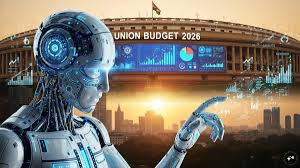
India’s Union Budget 2026 has unveiled Bharat Vistar, a new multilingual, AI-enabled digital platform aimed at strengthening decision-making and information access for farmers across the country. The initiative reflects the government’s broader push to integrate advanced technology into agriculture while ensuring inclusivity for small and marginal farmers.
According to budget announcements, Bharat Vistar is designed as a comprehensive digital support system that will provide farmers with timely, location-specific, and crop-relevant information. The platform will leverage artificial intelligence and data analytics to offer guidance on weather patterns, crop planning, pest and disease management, input usage, and market-related insights. By combining real-time data with predictive models, the tool aims to help farmers make more informed decisions at different stages of the crop cycle.
A key feature of Bharat Vistar is its multilingual interface. The platform will support multiple Indian languages, enabling farmers from diverse regions to access advisory services in their preferred language. This is expected to significantly improve adoption, particularly among farmers who have limited access to extension services or digital resources in their local language.
The government has positioned Bharat Vistar as a complement to existing digital agriculture initiatives, including soil health programmes, crop insurance platforms, and farmer databases. By integrating data from various sources, the tool is expected to deliver personalised advisories rather than generic recommendations. Officials say this approach will help improve productivity, optimise input use, and reduce risks associated with climate variability.
The platform is also expected to play a role in strengthening climate-resilient agriculture. With increasing frequency of extreme weather events, AI-based forecasting and early-warning advisories could help farmers take preventive measures, adjust sowing schedules, or plan irrigation more efficiently. This is particularly relevant as Indian agriculture faces rising challenges from heat stress, erratic rainfall, and water scarcity.
In addition to production-related guidance, Bharat Vistar is expected to offer information on government schemes, subsidies, and compliance requirements, helping farmers navigate policy frameworks more easily. Over time, the platform may also support linkages with markets and agri-service providers, improving access to value chains.
Experts view the launch of Bharat Vistar as a significant step toward data-driven and technology-enabled farming in India. However, they stress that effective implementation, last-mile connectivity, and farmer training will be critical to ensuring the platform delivers tangible benefits on the ground.
With Bharat Vistar, the Union Budget 2026 signals a continued focus on digital innovation in agriculture, aiming to empower farmers while enhancing efficiency and resilience across the sector.


 By
By











