

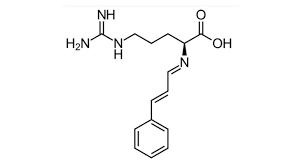
The International Organization for Standardization (ISO) has officially approved “fenargimine” as the designated common name for a new nematicide developed by SML Limited, marking an important regulatory milestone for the active ingredient’s global identification and future commercialization.
With this approval, fenargimine now enters the standardized international nomenclature system used across crop protection chemistry. The ISO common name ensures uniformity in scientific communication, regulatory documentation, trade, and labeling, reducing ambiguity that can arise when new molecules are identified only by technical or developmental codes during early research phases.
Fenargimine is the latest addition to emerging nematicidal chemistries aimed at combating economically significant plant-parasitic nematodes, which cause substantial yield losses across major crops worldwide. While detailed information on its mode of action, environmental behavior, and crop-use patterns will become available through subsequent regulatory submissions and product registrations, the active ingredient underscores ongoing industry efforts to innovate safer, more targeted pest-control solutions.
ISO’s common name approval typically signals that an active substance has reached an advanced stage in its development pipeline, enabling regulatory authorities, researchers, and manufacturers to reference the compound consistently across global markets. The standardized name also facilitates alignment with future Codex, national, and regional regulatory processes for evaluating efficacy, safety, and maximum residue limits.
For SML Limited, securing the ISO designation represents a significant step toward international recognition of its growing R&D portfolio in crop protection. The company is expected to announce additional details on fenargimine’s commercial formulation and application spectrum as it advances through market registration phases.
The approval highlights the continued expansion of innovative nematicide technologies, driven by increasing pest pressure and the need for sustainable yield protection in global agriculture.


 By
By











