

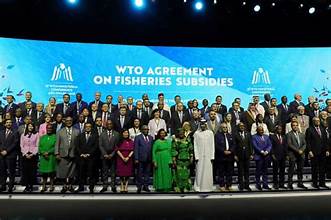
Trade ministers from across the globe have gathered in Yaoundé, Cameroon, for a new round of high-level negotiations at the World Trade Organization (WTO), with agriculture and fisheries emerging as the central focus. Despite the critical importance of both sectors to global food security and sustainable development, officials and observers expect only modest progress due to persistent geopolitical and economic headwinds.
The ministerial discussions, which form part of the WTO’s continuing efforts to modernize global trading rules, come at a moment when agricultural supply chains remain under stress from conflict-driven disruptions, climate-related shocks, and volatile commodity markets. In particular, developing nations have been urging the WTO to strengthen disciplines on agricultural subsidies—especially those provided by major economies—which they argue distort global markets and undermine the competitiveness of smallholder farmers.
However, diplomats familiar with the negotiations caution that achieving meaningful reform is difficult in the current environment. Several member states continue to hold firm positions on contentious issues such as domestic support limits, public stockholding for food security, and market access commitments. With national economies still recovering unevenly from recent global crises, consensus on subsidy disciplines appears unlikely in the short term.
Fisheries subsidies represent the other major agenda item, building on the partial agreement reached at the WTO’s 12th Ministerial Conference. That earlier accord targeted harmful subsidies contributing to illegal, unreported, and unregulated (IUU) fishing. The current talks aim to extend those disciplines to cover broader categories of subsidies that contribute to global overfishing and the depletion of marine resources.
Yet, similar political challenges loom. While many coastal and island nations advocate strong rules to protect their marine ecosystems, some large fishing nations maintain concerns that extensive new limits could constrain their fleets or weaken domestic support programs. Negotiators hope to narrow these differences, but most acknowledge that a full agreement may require further rounds of technical discussions and diplomatic compromise.
The choice of Cameroon as the host underscores the growing significance of Africa in global trade policy debates. Many African countries depend heavily on agriculture and small-scale fisheries for livelihoods, nutrition, and employment. Ministers from the region emphasized during opening remarks that global trade rules must better reflect the developmental needs of low-income economies and safeguard their long-term food security.
International trade analysts note that while expectations are modest, even incremental progress would carry symbolic value at a moment when the multilateral trading system faces mounting pressure. The WTO has struggled in recent years to overcome divisions on key reform priorities, raising questions about its ability to deliver comprehensive, consensus-based outcomes in a polarized geopolitical climate.
Still, ministers expressed hope that the Yaoundé meeting will reinvigorate dialogue and set the foundation for more ambitious negotiations later in the year. Discussions are expected to continue through the week, with working groups delving deeper into technical proposals on subsidy transparency, compliance mechanisms, and support pathways for developing economies.
As the talks unfold, the world’s attention remains fixed on whether WTO members can bridge their differences and deliver meaningful steps toward fairer, more sustainable trade in agriculture and fisheries—sectors that remain fundamental to global economic stability and the livelihoods of billions.


 By
By











