

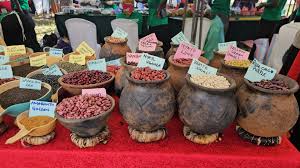
Researchers at the International Maize and Wheat Improvement Center (CIMMYT) have underscored the growing importance of community seed fairs as a practical, farmer-driven approach to improving local food security and strengthening resilience against climate and market disruptions. The events — which bring farmers together to exchange seeds, discuss cultivation practices, and showcase traditional crop varieties — are gaining recognition as a strategic model for agricultural development around the world.
CIMMYT’s research partners note that seed fairs serve as dynamic hubs for knowledge-sharing and genetic diversity conservation. Farmers attending these fairs have the opportunity to access locally adapted seeds, including landraces, open-pollinated varieties, and improved lines that have shown strong performance in variable environments. In many regions, such fairs are often the only platform where smallholders can obtain reliable planting material that suits their specific agroecological conditions.
With climate variability placing unprecedented stress on farming systems, the availability of diverse, resilient seed varieties is becoming increasingly critical. Extreme weather events, pest pressures, and unexpected market shifts have made it difficult for farmers to depend solely on commercial seed supply chains. Seed fairs provide an alternative mechanism that supports autonomy, diversity, and timely access to planting material — all of which are essential for maintaining stable production.
CIMMYT highlights that seed fairs also strengthen social networks within rural communities. By exchanging experiences and insights on crop performance, farmers enhance their capacity to respond effectively to climate stressors. The fairs often include demonstrations on seed cleaning, storage practices, regenerative techniques, and climate-smart agriculture solutions. These knowledge exchanges have proven particularly valuable for women farmers, who frequently lead seed selection and preservation efforts within households.
Beyond resilience, seed fairs contribute to safeguarding agrobiodiversity. Traditional crop varieties — such as local maize, sorghum, beans, and millets — often carry unique traits that enable them to survive drought, heat, or poor soils. By circulating these seeds through community networks, farmers help maintain genetic diversity that could otherwise be lost amid the rapid spread of uniform commercial varieties.
Development organisations are increasingly incorporating seed fairs into broader food security and rural development programmes. Several governments and NGOs are supporting these events as low-cost interventions with high impact, especially in marginal areas where formal seed systems remain weak or inaccessible.
CIMMYT researchers emphasise that as climate change accelerates, strengthening local seed systems will be essential for long-term agricultural resilience. Community seed fairs, they argue, represent a scalable and inclusive model that empowers farmers, enhances food system stability, and promotes biodiversity conservation.


 By
By











