

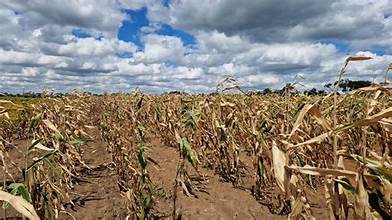
The United States is facing one of its most severe winter droughts in decades, with unprecedented heat and critically low soil moisture threatening both crop production and livestock systems. Agricultural economists warn that the evolving crisis could push food prices higher and undermine long-term farm productivity across major producing states.
According to early-season assessments, winter temperatures in several parts of the U.S. have remained far above historical averages, accelerating evaporation rates and drying out topsoil needed for the upcoming planting season. Key agricultural regions in the Midwest, Southern Plains, and parts of the West are reporting inadequate moisture levels, raising alarms about potential yield reductions in wheat, corn, and soybean crops.
Livestock producers are facing equally daunting challenges. Persistent dryness has reduced forage availability and stressed pasturelands, forcing many ranchers to rely more heavily on purchased feed. The tightening supply of cattle-ready feed and expanding production costs have already begun influencing beef markets, with analysts projecting noticeable price increases in the months ahead.
Climatologists attribute the extreme conditions to a combination of persistent atmospheric ridges, unusually warm ocean temperatures, and shifting jet stream patterns. While winter droughts are not unprecedented, the scale and intensity of the current episode have raised fresh concerns about the U.S. agricultural sector’s capacity to adapt to more frequent climate anomalies.
Farmers are also confronting operational uncertainties. Reduced snowpack in northern states and below-average reservoir levels in the West could further constrain irrigation supplies during peak demand periods. Without timely precipitation, early-season planting decisions may be disrupted, affecting both acreage choices and anticipated harvest volumes.
Federal and state agencies have begun monitoring the situation closely, with some regions likely to qualify for drought assistance programs if conditions worsen. However, agricultural groups argue that emergency interventions alone cannot offset the systemic challenges posed by prolonged climate stress.
Experts caution that if the drought extends into spring, the compounding effects on crops, livestock, input costs, and food inflation could be significant. The situation underscores the increasing vulnerability of U.S. agriculture to extreme weather patterns — a trend that is expected to intensify in coming years unless resilience measures are scaled up.


 By
By











