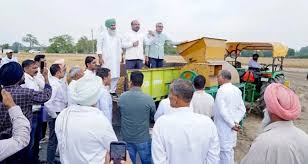
India is setting ambitious targets for agricultural growth in 2026, aiming to boost farm output and reinforce its position as a key contributor to global food security. The government of India is optimistic about achieving higher production levels across major crops, including rice, wheat, pulses, and oilseeds, driven by favorable policies, improved weather outlook, and increased adoption of modern farming techniques.
Agriculture remains the backbone of India’s economy, employing nearly half of the country’s workforce and playing a critical role in ensuring food availability for over 1.4 billion people. With global food systems under pressure due to climate change, geopolitical tensions, and supply disruptions, India’s expected increase in agricultural output comes at a crucial time.
Government officials highlight that a combination of strong monsoon forecasts and expanded irrigation coverage is likely to support higher crop yields. Additionally, initiatives promoting high-yield seed varieties, precision farming, and digital agriculture are helping farmers improve productivity and reduce risks. The use of technology—from satellite-based crop monitoring to mobile-based advisory services—is becoming increasingly widespread, enabling farmers to make more informed decisions.
Another key factor behind the anticipated growth is the government’s continued focus on farmer support schemes. Subsidies on fertilizers, access to affordable credit, and minimum support prices (MSP) for key crops are encouraging farmers to increase production. Investments in rural infrastructure, such as better storage facilities and transportation networks, are also reducing post-harvest losses and improving market access.
India is not only looking inward but also outward. As one of the world’s largest producers of staple crops, the country plays a significant role in global food trade. Higher production could allow India to expand exports of commodities like rice and wheat, helping to stabilize international markets that have been affected by supply shortages in other regions.
Experts believe that India’s push for higher output could have a balancing effect on global food prices. With several countries facing challenges such as droughts, fertilizer shortages, and rising input costs, increased supply from India may ease some of the pressure on global food systems.
However, challenges remain. Climate variability continues to pose risks, with unpredictable rainfall patterns and extreme weather events potentially affecting crop yields. Water management is another critical issue, as over-reliance on groundwater in some regions threatens long-term sustainability.
To address these concerns, there is a growing emphasis on sustainable agriculture. Practices such as crop diversification, organic farming, and efficient water use are being promoted to ensure that increased production does not come at the cost of environmental degradation.
In conclusion, India’s outlook for higher farm output in 2026 reflects both opportunity and responsibility. As the country works to strengthen its own food security, it also stands to play a pivotal role in supporting global supply at a time of uncertainty. If successful, this growth could not only benefit Indian farmers but also contribute to a more stable and resilient global food system.


 By
By