

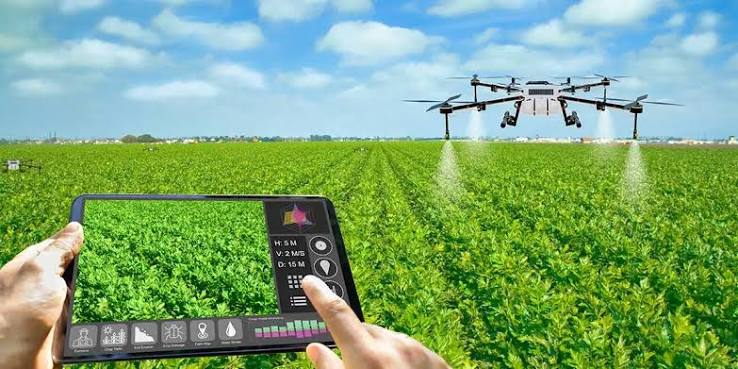
The global precision agriculture technology market is poised for sustained growth as farmers worldwide increasingly adopt advanced digital solutions to improve productivity, reduce input costs, and enhance environmental sustainability. According to a new global market analysis, the sector is expected to witness steady expansion over the coming years, fueled by the growing use of Global Navigation Satellite System (GNSS)-based guidance, autonomous farm machinery, artificial intelligence (AI), drones, sensors, and data-driven farm management technologies.
The report highlights that rising demand for efficient food production, combined with labor shortages, climate change, and the need for sustainable resource management, is accelerating the adoption of precision farming across both developed and emerging agricultural markets.
Digital Technologies Transforming Modern Agriculture
Precision agriculture has emerged as one of the most significant technological advancements in farming over the past decade. By integrating satellite navigation, real-time data, automation, and advanced analytics, farmers can make more informed decisions regarding planting, irrigation, fertilization, pest management, and harvesting.
Rather than treating an entire field uniformly, precision farming enables site-specific crop management, ensuring that inputs such as seeds, fertilizers, pesticides, and water are applied only where and when they are needed. This approach improves efficiency while reducing production costs and minimizing environmental impacts.
Experts believe that digital agriculture will play a crucial role in meeting the food demands of a global population expected to exceed 9.5 billion by 2050.
GNSS-Based Navigation Driving Adoption
One of the primary drivers of market growth is the widespread adoption of Global Navigation Satellite System (GNSS) technology. GNSS-based guidance systems allow tractors, sprayers, planters, and harvesters to operate with exceptional precision, reducing overlaps and minimizing gaps during field operations.
The technology offers several advantages, including:
- Improved planting accuracy.
- Reduced fuel consumption.
- Lower seed, fertilizer, and pesticide usage.
- Increased operational efficiency.
- Enhanced crop uniformity and yields.
Automatic steering systems powered by GNSS are now becoming standard equipment on modern agricultural machinery, particularly in large-scale farming operations.
Rise of Autonomous Farm Machinery
Autonomous and semi-autonomous agricultural equipment is another major factor contributing to the expansion of the precision agriculture market. Manufacturers are introducing tractors, robotic harvesters, autonomous sprayers, and driverless field equipment capable of performing routine farming operations with minimal human intervention.
These technologies help address one of agriculture’s biggest challenges—labor shortages—while enabling farmers to complete field operations more efficiently and accurately.
Artificial intelligence and machine learning further enhance autonomous machinery by enabling equipment to identify weeds, monitor crop health, and optimize field operations in real time.
Smart Farming Technologies Expand
The market analysis also points to growing investment in smart farming technologies, including:
- Internet of Things (IoT)-enabled field sensors.
- Drone-based crop monitoring.
- Satellite imagery and remote sensing.
- Variable rate application systems.
- Farm management software.
- AI-powered decision support tools.
- Weather forecasting and predictive analytics.
These technologies provide farmers with valuable insights into soil conditions, crop growth, nutrient requirements, pest outbreaks, and irrigation scheduling, allowing for faster and more informed decision-making.
Sustainability and Resource Efficiency
Sustainability remains one of the strongest drivers behind precision agriculture adoption. Governments, agricultural organizations, and consumers are increasingly encouraging farming systems that reduce environmental impacts while maintaining high productivity.
Precision farming contributes to sustainable agriculture by:
- Optimizing fertilizer and pesticide applications.
- Conserving water through precision irrigation.
- Reducing greenhouse gas emissions.
- Minimizing soil degradation.
- Improving nutrient-use efficiency.
- Protecting biodiversity by reducing unnecessary chemical inputs.
As environmental regulations become stricter in many countries, precision agriculture technologies are expected to play an even greater role in helping farmers comply with sustainability standards.
Opportunities Across Emerging Markets
While North America and Europe continue to lead in precision agriculture adoption, emerging economies in Asia, Latin America, and Africa are rapidly investing in digital farming solutions. Governments in these regions are supporting agricultural modernization through subsidies, digital infrastructure, and farmer training programs.
Lower-cost sensors, mobile-based advisory services, cloud computing, and improved internet connectivity are making precision farming technologies increasingly accessible to smallholder farmers.
Experts believe that expanding adoption in developing countries will be a major driver of future market growth.
Challenges Remain
Despite strong market prospects, the report identifies several barriers to wider adoption. High initial investment costs, limited digital infrastructure in rural areas, lack of technical expertise, and concerns regarding data management continue to affect technology uptake, particularly among small and medium-sized farms.
To overcome these challenges, industry stakeholders are focusing on affordable technology solutions, farmer education, financing options, and user-friendly digital platforms that simplify technology adoption.
Looking Ahead
The latest market analysis confirms that precision agriculture is becoming an integral part of the future of global farming. Advances in GNSS-based navigation, autonomous machinery, artificial intelligence, drones, IoT sensors, and digital farm management systems are enabling producers to improve efficiency while addressing growing environmental and economic challenges.
As global demand for food continues to rise and climate variability places greater pressure on agricultural systems, precision farming technologies will play a pivotal role in ensuring sustainable and resilient food production. With continued innovation, investment, and supportive policies, the precision agriculture market is expected to remain one of the fastest-growing segments of the global agricultural technology industry, helping farmers worldwide produce more with fewer resources while protecting the environment for future generations.


 By
By











