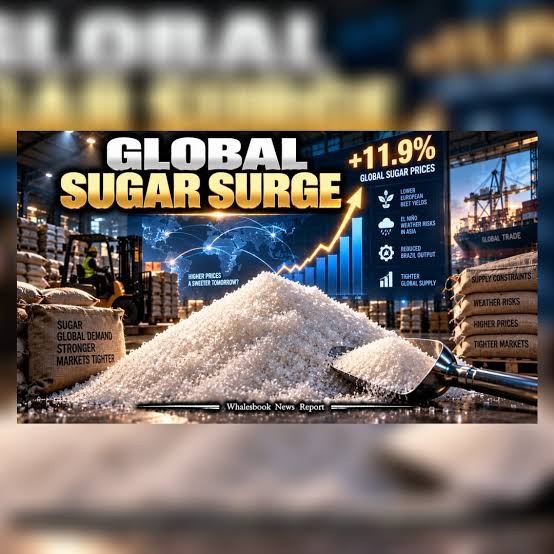
Global sugar prices witnessed a sharp increase in August, driven by growing concerns over production and weather conditions in major sugar-producing regions. The FAO Sugar Price Index jumped 11.9% in August, reaching its highest level since June 2025 and highlighting renewed pressure in the international sugar market.
The significant rise reflects concerns that global sugar supplies could become tighter in the coming months. Lower production prospects in Brazil, the world’s leading sugar producer and exporter, have emerged as a major factor behind the increase. At the same time, unfavorable weather conditions in parts of Europe and Asia are adding to uncertainty over global production.
Brazil Production Outlook Raises Concerns
Brazil plays a crucial role in the international sugar market, with its production and exports having a major influence on global prices. Any deterioration in crop prospects in the country can quickly affect international market expectations.
Concerns over lower Brazilian production have therefore contributed to the recent rise in sugar prices. Weather conditions during the growing and harvesting periods remain critical, as changes in rainfall and temperature can influence both sugarcane yields and sugar production.
The market is closely watching developments in Brazil because a reduction in output from such a major exporter could tighten international availability and encourage buyers to secure supplies.
Weather Risks in Europe and Asia
Weather uncertainty is also affecting sugar production prospects outside Brazil. Parts of Europe and Asia are facing conditions that could negatively influence sugar crops.
Sugarcane and sugar beet production are highly sensitive to weather conditions. Excessive heat, inadequate rainfall, heavy precipitation or other extreme weather events can affect crop development and reduce yields.
Such risks have increased uncertainty among traders and contributed to stronger international sugar prices.
Impact on Global Food Markets
The increase in sugar prices could have wider implications for the global food industry. Sugar is an important raw material used in beverages, confectionery, processed foods and several other products. A sustained increase in sugar prices could therefore raise production costs for food manufacturers.
For consumers, higher input costs may eventually contribute to increased prices for sugar-containing products, although the extent of the impact will depend on domestic markets, inventories and other production costs.
For sugarcane and sugar beet farmers, higher international prices could provide an opportunity for improved returns. However, farmers must also contend with input costs, weather risks and fluctuations in domestic markets.
Global Sugar Market Faces Greater Uncertainty
The 11.9% monthly increase in the FAO Sugar Price Index signals a significant change in market sentiment. While the price rise does not necessarily indicate an immediate global shortage, it reflects increasing concern about future availability.
The outlook will depend heavily on crop conditions in Brazil, Europe and Asia, as well as weather developments during the upcoming production cycles. Export policies, global demand and currency movements could also influence international sugar prices.
Overall, the latest FAO data indicate that the global sugar market is entering a period of increased uncertainty. Lower production prospects in Brazil combined with weather-related risks in Europe and Asia could keep sugar prices under pressure in the months ahead, making production forecasts and weather developments critical factors for farmers, traders, food companies and consumers worldwide.


 By
By