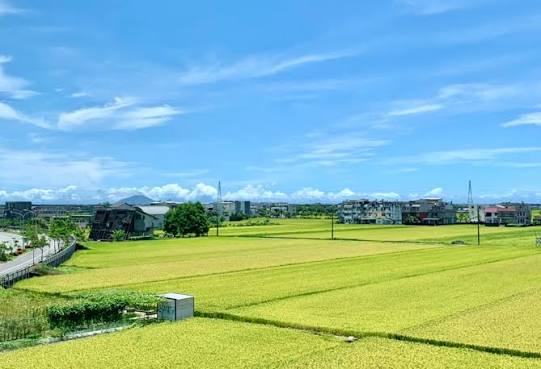
Taiwan is turning agricultural waste into valuable products such as textile yarn and biomass fuel as the country accelerates its transition toward net-zero agriculture. The initiative reflects a growing focus on the circular economy, where farm by-products that were once discarded or burned are converted into new sources of economic and environmental value.
Taiwan’s Ministry of Agriculture began its agricultural net-zero strategy in 2022 with the goal of reducing emissions from the agriculture sector. Since then, the programme has supported the development of 49 products made from agricultural waste, while 19 companies have joined the initiative with combined investments of around NT$320 million (US$10 million). The projects have generated approximately NT$150 million (US$4.7 million) in economic output.
Agricultural Waste Becomes Sustainable Yarn
One of the most innovative applications is the conversion of agricultural by-products into textile materials. A textile company in Tainan has developed yarn using discarded oyster shells, combining oyster shell powder with recycled plastic bottles to create functional fibres.
Taiwan is also exploring the use of other agricultural residues, including cacao pod husks, as raw materials for sustainable textile products. Taiwanese textile technology company GrandeTex has developed SECAO®, a bio-based yarn that uses agricultural waste and fermentation and hydrolysis technology to create textile materials.
Such technologies could provide agriculture with a new revenue stream while reducing the amount of organic material that needs to be disposed of or burned.
Farm Residues Converted Into Biomass Fuel
Agricultural waste is also being used as an energy resource. In Tainan, a dried-longan farm processes pruned branches and other dry wood from the farm into biomass pellets. These pellets are then used as fuel to dry longans, creating a closed-loop system in which agricultural residues provide energy for agricultural processing.
This approach can reduce dependence on conventional fuels while creating a productive use for material that might otherwise be treated as waste. Taiwan’s wider circular-economy policies also promote the conversion of suitable waste materials into energy and solid recovered fuels.
Supporting Taiwan’s Net-Zero Agriculture Goal
Taiwan’s agricultural net-zero strategy goes beyond waste recycling. The government is also working to reduce methane emissions from rice cultivation and livestock manure, as well as nitrous oxide emissions associated with excessive fertilizer use. Taiwan’s agricultural sector emitted about 6.5 billion kilograms of CO₂-equivalent emissions in 2024, accounting for approximately 2.38% of the country’s total emissions.
The government’s strategy is built around four broad approaches: reducing emissions, recycling agricultural resources, increasing carbon sinks and promoting green development. Its agricultural net-zero programme specifically encourages agricultural residues to be transformed into energy, materials and higher-value products.
A Model for the Circular Agriculture Economy
Taiwan’s experience demonstrates how agricultural waste can become an economic resource rather than a disposal problem. Turning crop and farm residues into textiles, biomass fuel and other value-added products can potentially create additional income opportunities for farmers, support rural industries and reduce environmental impacts.
As countries worldwide search for practical pathways toward low-carbon agriculture, Taiwan’s approach offers an important example of how innovation, recycling and private-sector investment can work together to build a more sustainable agricultural economy.

 By
By