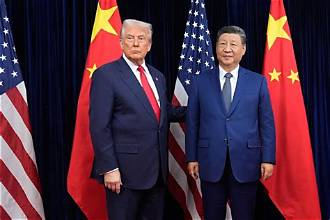
American soybean producers are urging the United States government to secure the removal of China’s remaining 10% retaliatory tariff on US soybean imports ahead of an important meeting between US President Donald Trump and Chinese President Xi Jinping at the Asia-Pacific Economic Cooperation (APEC) summit on November 18–19 in Shenzhen, China.
The American Soybean Association (ASA) has called on the Trump administration to make the removal of the tariff a key priority in ongoing trade negotiations with Beijing. The organisation believes that the remaining duty is putting American soybean producers at a competitive disadvantage compared with agricultural exporters from Brazil and other South American countries.
In a letter addressed to US Treasury Secretary Scott Bessent and US Trade Representative Jamieson Greer, the ASA stressed that eliminating the remaining tariff would help restore long-term trade certainty and improve access to China’s commercial soybean market.
Why the Remaining 10% Tariff Matters
China is one of the world’s largest soybean importers and an important destination for American agricultural exports. However, the continued 10% retaliatory tariff has created additional challenges for US soybean exporters seeking to compete in the Chinese market.
According to the ASA, the tariff limits the competitiveness of US soybeans against supplies from Brazil and other South American exporters, which have more favourable access to Chinese commercial buyers.
The association has also highlighted that the remaining duty restricts participation by private Chinese soybean importers, leaving a larger share of US soybean purchases dependent on state-owned enterprises.
Removing the tariff could therefore broaden the customer base for American soybean exporters and create more consistent demand from Chinese commercial buyers.
China’s Soybean Purchase Commitment Under Focus
Another important issue in the upcoming discussions is China’s commitment to purchase at least 25 million metric tonnes of US soybeans annually in 2026, 2027 and 2028.
The commitment is part of broader efforts to stabilise agricultural trade between the two countries following previous rounds of tariff disputes.
According to US Department of Agriculture data cited by industry reports, China had committed to approximately 611.3 million bushels of US soybeans as of November 5, representing around two-thirds of the annual purchase target.
American agricultural organisations are seeking stronger assurances that China will fulfil its purchasing commitments while also improving market access for US agricultural products.
APEC Summit Could Influence Global Agricultural Trade
The November 18–19 APEC summit is attracting significant attention from international agricultural markets because of the expected discussions between Trump and Xi.
Agricultural trade, tariffs, export commitments and broader economic cooperation are among the important issues influencing the US-China relationship.
The two countries have already established a Board of Trade mechanism to address outstanding trade issues and discuss possible tariff reductions. However, soybeans remain an important unresolved issue for American agricultural exporters.
The existing trade truce has been extended until January 10, 2027, providing additional time for negotiations.
Potential Impact on International Soybean Markets
Developments in US-China trade relations could have significant implications for international soybean prices, export flows and global market competition.
If China removes the remaining tariff, American soybean exporters could become more competitive in one of the world’s largest agricultural import markets. This could influence purchasing patterns and competition with Brazilian and Argentine soybean suppliers.
On the other hand, continued tariff restrictions could encourage Chinese buyers to maintain greater reliance on alternative suppliers, particularly South America.
For soybean farmers, exporters, traders and agricultural businesses, the outcome of the upcoming discussions will be important in determining future market opportunities.
The Trump-Xi meeting could therefore become a significant milestone for global agricultural trade, with the future of US soybean access to China remaining one of the key issues under negotiation.


 By