

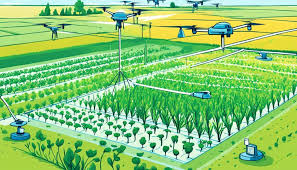
Reaffirming its commitment to strengthen the agriculture sector, the Government of India has significantly increased the budgetary allocation for the Department of Agriculture and Farmers’ Welfare (DA&FW) in the Union Budget 2025–26. The department’s budget estimate has risen to ₹1,27,290 crore for the current financial year, highlighting agriculture as a central pillar of national development.
According to the Periodic Labour Force Survey (PLFS) 2023–24, conducted by the National Statistical Office (NSO), nearly 46.1% of India’s workforce is engaged in agriculture and allied sectors. This reinforces the vital role agriculture continues to play in India’s socio-economic fabric.
Budget Grows Nearly Sixfold in a Decade
The budget for DA&FW has seen a remarkable increase from ₹21,933 crore in FY 2013–14 to ₹1,27,290 crore in FY 2025–26, underlining the government’s consistent focus on rural prosperity, farmers’ welfare, and agricultural modernization.
The budgetary increase supports flagship schemes such as PM-KISAN, PMFBY, and the Agriculture Infrastructure Fund (AIF), as well as other critical interventions for irrigation, digital farming, soil health, and agri-marketing.
Contributions from Other Ministries
Apart from the DA&FW, several other ministries and departments also make substantial contributions to the growth of the agriculture sector:
- Ministry of New and Renewable Energy (MNRE) through PM-KUSUM, promoting solar energy use among farmers.
- Department of Agricultural Research and Education (DARE), focusing on innovation and research-driven agri-development.
- Ministry of Jal Shakti, implementing irrigation programs under the Pradhan Mantri Krishi Sinchayee Yojana (PMKSY).
- Ministry of Chemicals and Fertilizers, ensuring timely availability of fertilizers.
- Ministry of Rural Development, supporting rural livelihoods through schemes like MGNREGS, which also benefit agricultural infrastructure.
Budget Utilization and Central Plan Share
The government has also maintained strong performance in terms of fund utilization. According to the data provided, here is a summary of budget estimates, actual expenditures, and the percentage share of DA&FW in the Central Plan outlay over the last five years:
| Year | Budget Estimate (₹ crore) | Actual Expenditure (₹ crore) | Total Central Outlay (₹ crore) | DA&FW Share (%) |
| 2021-22 | 1,23,017.57 | 1,14,840.43 | 34,83,235.63 | 3.53% |
| 2022-23 | 1,24,000.00 | 1,01,572.54 | 39,44,908.67 | 3.14% |
| 2023-24 | 1,15,531.79 | 1,10,283.64 | 45,03,097.45 | 2.57% |
| 2024-25* | 1,22,528.77 | 1,23,987.13 | 48,20,512.08 | 2.54% |
| 2025-26 | 1,27,290.16 | — | 50,65,345.04 | 2.51% |
*2024–25 data is provisional.
While the percentage share of agriculture in the overall central plan has seen a slight decline, the absolute allocation has consistently increased year-on-year, signaling the Government’s evolving strategy to balance agricultural development with other national priorities.
Conclusion
By prioritizing agriculture in the national budget and ensuring cross-ministerial collaboration, the Government of India continues to invest in creating a resilient, modern, and inclusive agricultural ecosystem. These budgetary measures aim not only to enhance productivity but also to ensure better livelihoods for millions of farmers who remain at the heart of the Indian economy.


 By












