

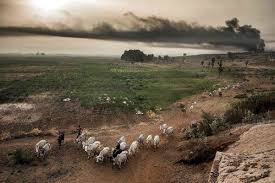
Agriculture across the Asia-Pacific region is facing growing “compounding risks” from climate change, trade uncertainty, extreme weather events, and economic instability, according to recent assessments linked to the Food and Agriculture Organization (FAO).
The report warns that the combination of rising temperatures, floods, droughts, volatile agricultural markets, and increasing production costs is placing severe pressure on farming systems and food supply chains across the region. Experts say these overlapping challenges could create long-term threats to food security, rural livelihoods, and agricultural sustainability if stronger adaptation measures are not implemented.
Climate-related disasters remain one of the biggest concerns for the Asia-Pacific agricultural sector. Several countries in the region are experiencing more frequent heatwaves, irregular monsoon patterns, cyclones, droughts, and flash floods, which are disrupting crop cycles and reducing agricultural productivity.
Researchers noted that rice, wheat, maize, fruits, and vegetable production are increasingly vulnerable to unstable weather conditions. Water shortages in some areas and excessive rainfall in others are making farming operations less predictable, particularly for smallholder farmers who depend heavily on seasonal climate patterns.
The report also highlights the impact of global trade volatility and economic uncertainty on agricultural markets. Rising fuel prices, expensive fertilizers, and supply chain disruptions are increasing input costs for farmers across the region. In many countries, producers are struggling to maintain profitability as cultivation expenses continue to rise.
Agricultural experts believe that import-dependent nations are especially vulnerable to fluctuations in international commodity prices and disruptions in global food trade. Any major supply shock could increase inflationary pressure on food markets and affect access to affordable food for millions of people.
In addition to climate and market challenges, rural labor shortages and declining investment in agricultural infrastructure are creating further difficulties for long-term productivity growth. Experts warn that without stronger policy support, the region could face widening gaps between food demand and domestic production capacity.
The assessment calls for greater regional cooperation, investment in climate-resilient farming technologies, improved water management systems, and stronger social protection programs for farmers. Scientists and policymakers also emphasized the importance of sustainable agricultural practices and early warning systems to reduce future climate-related risks.
Experts say building resilient food systems will be critical for ensuring long-term food security across the Asia-Pacific region as environmental and economic uncertainties continue to grow.


 By
By


 pkspinrollz says:








