

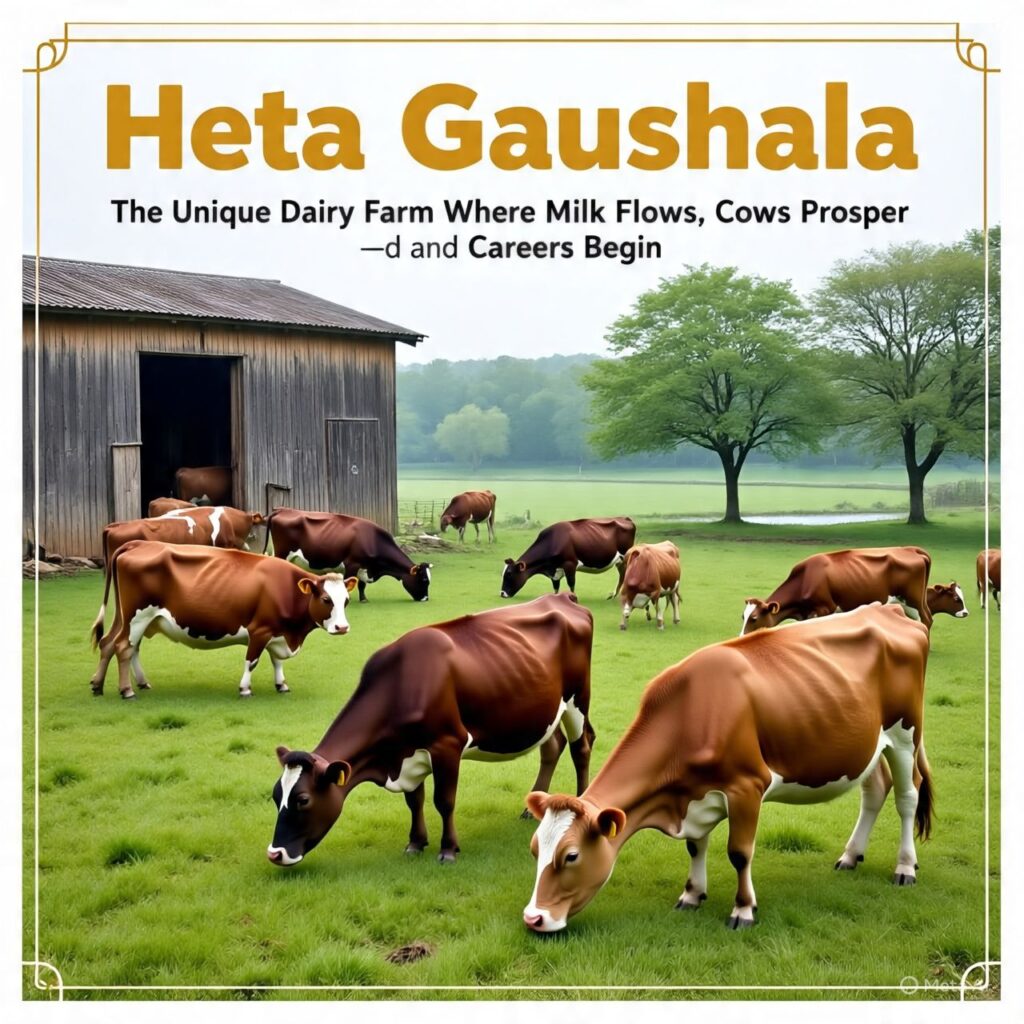
When people hear about a dairy farm in India, their minds usually picture lush green fields, rows of cows grazing peacefully, and farmers collecting fresh milk at dawn. Traditionally, a dairy is seen as a place that produces milk, curd, ghee, and sometimes sells cow dung and cow urine for additional income.
But what if a dairy farm did much more than just produce dairy products? What if it offered real jobs — not just for daily wage workers like cowherds and milkmen — but actual salaried employment with interviews, training, and career growth?
In the heart of Uttar Pradesh’s bustling Ghaziabad district lies Heta Gaushala, an exceptional example of how India’s traditional dairy sector can innovate and evolve into a professional, organized, and impactful enterprise that creates economic and social value far beyond the barn.
Where It All Began: A Dairy With a Vision
The story of Heta Gaushala is not just about milking cows; it’s about milking opportunities in a way that empowers people and preserves ancient traditions. This gaushala (cow shelter) was set up with a clear goal — to provide quality dairy products while ensuring that cows are treated humanely and sustainably.
Heta Gaushala’s founders wanted to break away from the conventional image of a rural dairy. They envisioned a place where modern management met traditional cow rearing practices — and where local communities could find dignified employment, not just daily wage labor.
Beyond Milk: How Heta Makes Money
Of course, like any dairy, Heta Gaushala earns revenue from its core products — fresh milk, curd, paneer, ghee, and buttermilk. The cows here are mostly native breeds, prized for their nutrient-rich milk.
But the income model doesn’t stop there. The farm uses cow dung to make organic fertilizers and compost, which are sold to local farmers and urban gardening enthusiasts. Cow urine — or gomutra — is collected, processed, and sold as an ingredient for natural pesticides, Ayurvedic medicines, and organic farming products.
By diversifying its products, the gaushala adds multiple streams of revenue that keep it profitable while making full use of every byproduct a cow naturally offers.
Where Jobs Come In: More Than Just Cowherds
Traditionally, people associate jobs at a dairy with roles like milking cows, feeding cattle, cleaning sheds, or taking milk cans to the market. These roles, though crucial, are mostly low-paying and informal.
Heta Gaushala, however, has changed the game by introducing an organized recruitment system. Here, people don’t just walk in and get hired as laborers — they apply for jobs, appear for interviews, and undergo training.
From animal caretakers to supervisors, logistics coordinators, quality control managers, sales executives, and even digital marketing assistants — this gaushala runs like a mini enterprise. Each role has defined responsibilities, and employees get stable monthly salaries, fair working hours, and in many cases, accommodation and meals too.
Interviewing at a Dairy: An Unlikely but Practical Idea
Why does a gaushala conduct interviews? The answer is simple: professionalism.
The founders believe that just like any other business, their dairy needs committed, skilled workers who understand hygiene, animal care, supply chain management, and customer service. By hiring people after interviews and practical demonstrations, they ensure they get reliable employees who take their work seriously.
For instance:
- A cow caretaker must know how to handle animals gently but firmly, spot early signs of illness, and maintain feeding routines.
- A milking supervisor must know modern milking machine operations and hygiene standards.
- A sales executive must know how to talk to customers and manage delivery schedules.
This system benefits both sides. Workers get long-term, dignified jobs, and the gaushala runs smoothly and efficiently.
Skills and Training: From Rural Youth to Skilled Workforce
One of the gaushala’s biggest contributions is training local youth. Many young men and women from nearby villages often migrate to cities for factory or labor work. Heta Gaushala offers them a chance to stay closer to home while gaining skills in dairy management, animal health, organic farming, and marketing.
New recruits are given hands-on training on:
- Animal nutrition and health management
- Safe milking practices
- Waste management and compost production
- Basic accounting and inventory tracking
- Customer relationship skills for selling dairy products
For many, this is their first exposure to formal work culture — punctuality, uniforms, shifts, and scheduled holidays. Over time, these workers build confidence and sometimes even branch out to start their own small dairies or organic farms.
Women Finding Empowerment
Heta Gaushala’s inclusive approach extends to women too. Traditionally, women in villages help with feeding cows or cleaning sheds but rarely get recognized as employees.
Here, women are trained and employed in roles like:
- Processing curd, butter, and paneer
- Packaging milk products
- Maintaining hygiene and quality standards
- Handling orders and customer queries
Steady income gives these women financial independence and boosts their families’ income, changing social dynamics in villages where women’s work often goes unpaid or undervalued.
Modern Tech in a Traditional Setup
Despite being rooted in traditional cow rearing, Heta Gaushala embraces modern practices. They use:
- Milking machines for hygienic and efficient milk extraction.
- Cold storage units to keep milk fresh until delivery.
- Biogas plants powered by cow dung, which supply clean energy to run parts of the farm.
- Digital record-keeping for herd health, breeding cycles, and milk output tracking.
The gaushala also uses social media to reach customers directly. Many urban families subscribe to daily fresh milk delivery through online orders.
Community Benefits: Not Just an Employer, But a Catalyst
Heta Gaushala’s impact goes beyond its gates. By buying fodder locally and selling organic manure, it creates a circular economy that benefits farmers in the area.
It also hosts school visits and awareness programs about native cow breeds, organic farming, and sustainable rural livelihoods. For local communities, the gaushala is a source of pride — a living example of how tradition and modernity can work together.
Why Such Models Matter for India’s Dairy Sector
India is the world’s largest milk producer, but the backbone of this achievement is millions of small farmers with just 2–5 cows each. Most operate informally, earn small margins, and struggle with fluctuating milk prices.
Models like Heta Gaushala show what’s possible when:
- Cow shelters run with professional management.
- Every byproduct is monetized creatively.
- Locals get dignified jobs, not just daily wage labor.
- Quality control and branding boost market value.
- The community is treated as a stakeholder.
Such organized dairies could become the future of India’s dairy sector — combining traditional knowledge with modern systems to create jobs, ensure fair wages, and promote animal welfare.
Sustainable and Humane: A Big Plus
Animal welfare is at the heart of Heta Gaushala’s ethos. Native breeds are protected, calves are not separated abruptly, and sick animals are cared for until natural death.
The emphasis on organic inputs means no harmful chemicals enter the food chain. Even waste is managed responsibly: cow dung powers biogas plants, and leftover fodder is composted.
This approach appeals to a growing number of urban customers who want safe, ethical dairy products.
Challenges on the Road Ahead
Running a professional dairy farm like Heta’s is not without hurdles:
- High-quality fodder and clean water must be available year-round.
- Skilled manpower must be retained in rural areas.
- Marketing and last-mile delivery need strong logistics.
- Competing with large commercial dairies can be tough on pricing.
However, the farm’s unique positioning — quality, transparency, and community engagement — keeps it resilient.
A Model for the Future
Heta Gaushala isn’t just a local success; it’s a blueprint for the future. Its approach can inspire:
- Rural entrepreneurs to set up similar organized dairies.
- State governments to support professional cow shelters that create rural jobs.
- Urban consumers to choose ethical, local milk products.
It shows how something as simple as a cow can generate not just milk but also clean energy, organic manure, healthcare products — and most importantly, stable employment and hope.
Conclusion: More Than a Dairy, a Livelihood Hub
At a time when India’s rural youth are seeking meaningful employment and the dairy industry is under pressure to modernize, Heta Gaushala stands out as a shining example.
It combines tradition with innovation, transforms waste into wealth, and turns an ordinary gaushala into an extraordinary place where people don’t just care for cows — they build careers, communities, and a sustainable future.
So, the next time you pour a glass of milk, remember — behind it could be a place like Heta, where a cow’s gift feeds not only families but dreams.


 By












