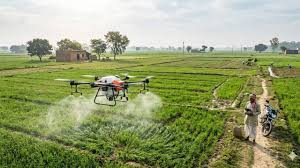
A major breakthrough in crop protection is on the horizon as Syngenta announces the launch of a new herbicide designed to combat herbicide-resistant “superweeds.” These aggressive weeds have become a growing global threat, causing billions of dollars in crop losses each year and challenging modern farming systems.
Superweeds develop when weeds evolve resistance to commonly used herbicides after repeated exposure over time. This resistance makes traditional weed-control methods less effective, allowing invasive species to spread rapidly and compete with crops for nutrients, water, and sunlight. As a result, farmers face declining yields and increased production costs.
The newly introduced herbicide by Syngenta is specifically formulated to target resistant weed species that no longer respond to conventional treatments. According to the company, the product uses a novel mode of action, helping to break the cycle of resistance and restore effective weed management. This innovation is expected to be particularly beneficial for crops such as soybeans, corn, and cotton, where weed resistance has been a persistent issue.
Agricultural experts have welcomed the development, noting that herbicide resistance has become one of the most pressing challenges in global agriculture. In regions like North America, South America, and parts of Asia, resistant weeds such as Palmer amaranth and waterhemp have significantly impacted crop productivity. Without effective solutions, these weeds can reduce yields by up to 50% in severe cases.
Beyond improving crop yields, the new herbicide could also help reduce the need for multiple chemical applications, lowering overall input costs for farmers. It may also support more sustainable farming practices by enabling better weed control with fewer resources.
However, experts caution that no single product can fully solve the problem of herbicide resistance. They emphasize the importance of integrated weed management strategies, including crop rotation, mechanical control methods, and the responsible use of herbicides. Overreliance on any one solution could eventually lead to new forms of resistance.
Regulatory approvals and field trials will play a key role in determining how quickly and widely the herbicide is adopted. If successful, the product could become an important tool in the global effort to safeguard food production and ensure agricultural sustainability.
As the challenge of superweeds continues to grow, innovations like this highlight the critical role of research and technology in supporting farmers and protecting the world’s food supply.


 By
By