

When monsoon clouds gather over Bihar, they usually bring relief for farmers and hope for households that rely on affordable, fresh vegetables. But this year, the story playing out in Patna’s vegetable markets tells us something different something worrisome for both the common consumer and the small vegetable grower.
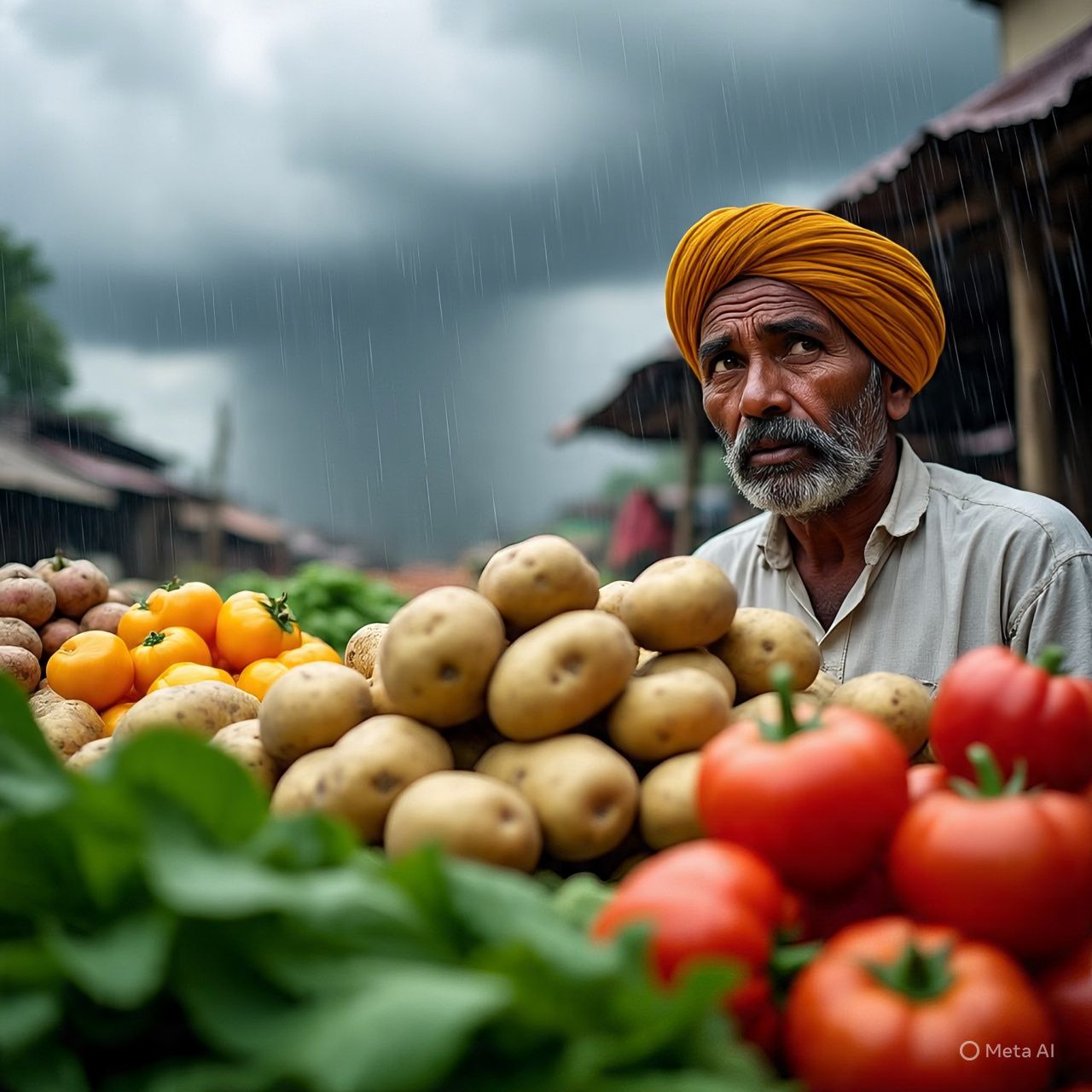
At Anta Ghat, one of the busiest vegetable wholesale markets in Bihar’s capital, vendors are shaking their heads at the sudden spike in prices. Green chillies, which used to be sold in handfuls for just a few rupees, have now touched a century mark ₹100 per kilogram or even higher in some retail shops. The situation is similar for almost every other vegetable. Prices have shot up by ₹10-₹20 per kilogram in just the last few days, leaving both traders and buyers anxious about what’s to come.
A Delicate Balance: When Monsoon Fails to Deliver
To understand why vegetables in Patna are burning holes in pockets this July, we have to look beyond the market stalls. The problem begins in the fields — with erratic rainfall patterns that continue to haunt Bihar’s agriculture.
When the first drops of the monsoon fall in June, farmers across the state breathe a sigh of relief. Timely rains mean timely sowing. Good showers mean healthy crops. But this year, June’s rainfall was far below normal in many districts. Fields that should have been lush with young saplings and flourishing green beds were parched and cracked instead.
This rainfall deficit hit vegetable cultivation hard. Unlike cereal crops, vegetables need consistent watering and careful moisture control. When rain is late or scanty, the young plants wither, or their yield reduces drastically.
Then came the next twist: in July, instead of widespread steady rain, sporadic heavy showers arrived, often accompanied by floods in low lying fields. For many vegetable farmers, this means plants drowning in excess water, rotting at the root, or being destroyed by pests and diseases that thrive in wet, humid conditions.
So, the monsoon which should have been a friend turned unpredictable. And when the supply chain weakens in the fields, the market feels the tremors.
Anta Ghat: A Marketplace Under Pressure
In Patna’s famous Anta Ghat mandi, the signs of stress are visible every morning. Traders complain about trucks arriving half empty, and what produce they do get is often of lower quality due to water damage or fungal issues.
Wholesalers say that vegetables like tomatoes, green chillies, capsicum, and ladyfinger are seeing daily fluctuations. A single spell of rain in the countryside can wash away fields overnight. This uncertainty forces traders to bid higher for limited supply, which in turn pushes up retail prices.
Many vegetable vendors in Patna’s neighborhoods are forced to buy costlier stocks but cannot always pass the full increase to customers, fearing they’ll lose buyers altogether. In this tug-of-war, both vendors and families end up suffering.
Green Chilli at ₹100: Why This Hurts
The green chilli is an everyday essential in millions of Indian kitchens. It is not an exotic vegetable; it is a staple that gives flavor and zest to daily meals. When its price touches ₹100 per kg in local retail markets a rate usually reserved for dry fruits or premium fruits you know something is seriously wrong.
For daily wage workers, laborers, and middle-class families, this means adjusting household budgets overnight. People buy smaller quantities, skip on other vegetables, or settle for second-grade quality. Small eateries and street food sellers also face a crisis because their cost of production rises, but they can’t hike prices by 50% without losing customers.
The Farmer’s Side: Who Really Gains?
A common misconception is that when prices soar in city markets, the farmer must be getting rich. The reality is more complicated and more frustrating.
When the monsoon misbehaves, small farmers actually lose more than they gain. Many fields get waterlogged, destroying entire crops. Farmers who did manage to save some harvest see only partial benefits because they often sell in distress at the village level to middlemen who hoard and sell at a premium in cities like Patna.
Transportation is another problem. Flooded village roads, broken rural connectivity, and delays in moving produce from farm to market lead to spoilage and wastage. By the time the surviving vegetables reach wholesale mandis, the price has already climbed but the farmer’s share remains small.
Climate Change: The Bigger Elephant in the Room
What is happening in Patna’s vegetable markets is not just a seasonal glitch it is a preview of the bigger climate challenges India’s agriculture faces. Scientists have long warned that erratic monsoons, unseasonal floods, and sudden dry spells will increase in frequency and intensity.
Vegetables because they are perishable and grown mostly by small and marginal farmers are extremely vulnerable to climate swings. Unlike wheat or rice, there is no large safety net like Minimum Support Price (MSP) for vegetables. Farmers depend almost entirely on market dynamics and local weather.
This is why the slightest imbalance late rain, sudden flood, pest attack immediately disrupts supply and pushes up prices in cities.
What Can Be Done: Smarter Solutions for Future Markets
So, is there a way out of this cycle of monsoon shock and market stress? Experts say yes, but it will require changes at multiple levels.
1️⃣ Better Irrigation and Drainage
In places like Bihar, small farmers mostly rely on rain for watering crops. More investment is needed in affordable micro-irrigation, drip systems, and rainwater harvesting ponds. Equally important is better drainage in low-lying vegetable fields so that heavy rain does not drown plants overnight.
2️⃣ Protected Cultivation
Greenhouses and polyhouses even small low cost ones can protect high value vegetables from sudden weather damage. States like Maharashtra and Karnataka have demonstrated this on a large scale for capsicum, tomato, and exotic vegetables.
3️⃣ Weather Forecasting and Crop Advisory
Accurate hyper-local weather forecasts and timely advisory can help farmers take quick decisions when to sow, when to harvest early, when to shift to another patch. Mobile apps and village level information centers can make a huge difference.
4️⃣ Better Storage and Cold Chain
One reason prices shoot up so fast is that there is little capacity to store surplus produce safely. Modern cold chains, village-level pack houses, and refrigerated trucks can help stabilize supply. Bihar, with its high vegetable output, needs to ramp up these facilities.
5️⃣ Farmer Producer Organizations (FPOs)
When small farmers form FPOs, they gain bargaining power to negotiate better prices, invest in storage collectively, and reduce the grip of middlemen. Bihar has started promoting FPOs, but many more need support.
Consumer Behavior: Adapting in Tough Times
While policy changes work in the long run, households in Patna and other cities are forced to adjust immediately. Families often switch to cheaper, seasonal vegetables that are relatively more abundant. Leafy greens, gourds, and root vegetables may offer some relief when chillies and tomatoes become unaffordable.
Community kitchens and cooperative retail shops can also cushion the impact by buying directly from farmers and selling at reasonable prices, cutting out speculative traders.
The Silent Impact: Nutrition Takes a Hit
There is another hidden cost when vegetable prices surge nutrition. Poor families tend to buy less variety and less quantity when prices rise. Essential nutrients found in fresh greens, chillies, and other vegetables are replaced with cheaper, less nutritious staples like rice and wheat.
For children, women, and the elderly, this nutritional gap can lead to long-term health problems. So, vegetable inflation is not just an economic issue — it is a public health challenge too.
The Road Ahead for Bihar
Bihar is among India’s largest producers of vegetables. Its fertile plains, hardworking farmers, and abundant water resources should ideally make it a hub of affordable, high quality produce for the entire region.
Yet, without modern storage, weather-resilient farming, and better market linkages, this potential remains unrealized every monsoon.
The state government has initiated various horticulture missions, irrigation projects, and farmer training programs. But as climate shocks increase, these efforts need to scale up quickly and reach every small grower especially those in flood-prone belts near major rivers like the Ganga.
Conclusion: A Shared Responsibility
The drama unfolding in Anta Ghat mandi this monsoon is not just about high prices — it’s a wake-up call. It shows us how climate, agriculture, markets, and daily lives are deeply connected.
For the urban middle class, vegetable inflation pinches the monthly budget. For small farmers, it is a question of survival or debt. For children and families, it is a test of nutrition and health.
To break this cycle, Bihar needs better policies, smarter investments, and strong community-led solutions. It needs empowered farmers who can adapt to changing weather. It needs storage and supply chains that don’t break down every rainy season. It needs consumers who understand where their food comes from and why it matters.
If all this happens, maybe someday soon, when the monsoon arrives, it will once again bring only relief not the fear of yet another spike in the price of a simple green chilli.


 By












