

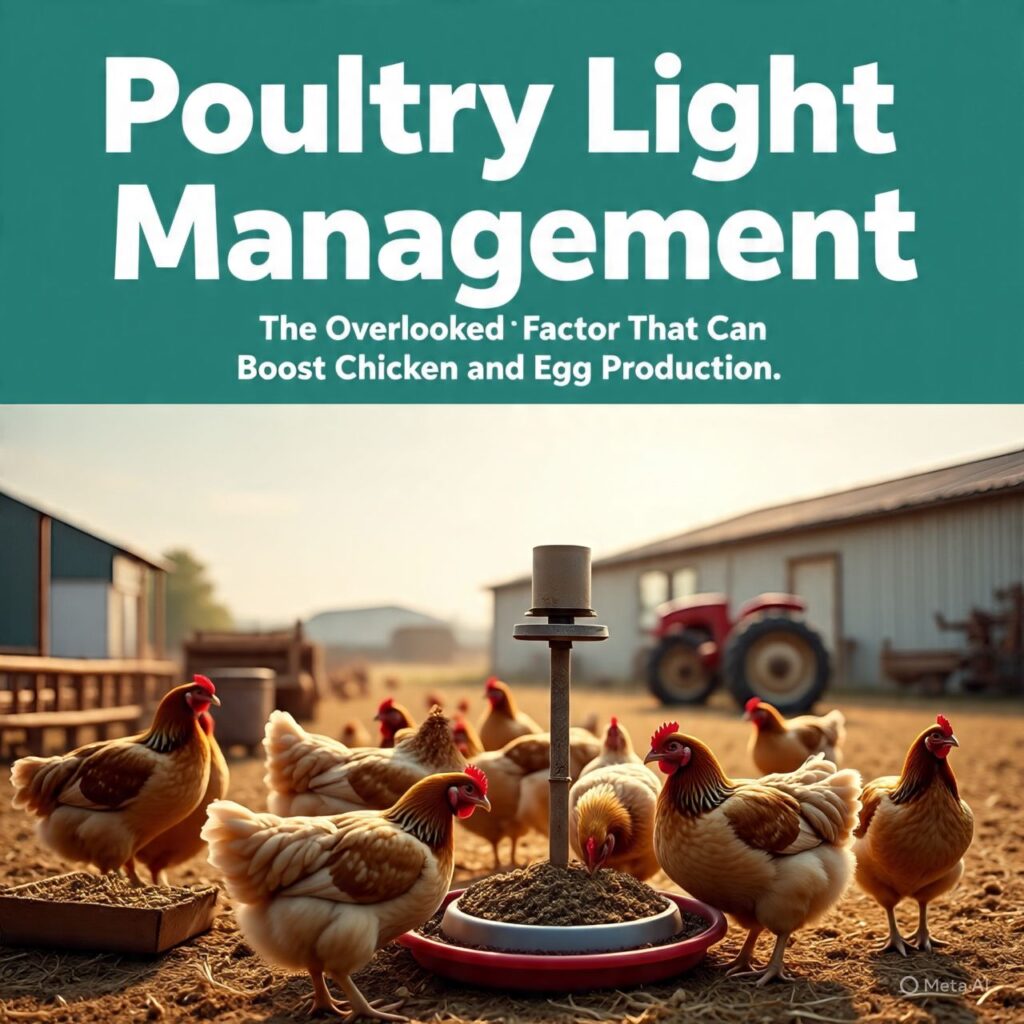
In the world of poultry farming, feed quality, breed selection, biosecurity, and housing design are topics that often dominate the discussion. However, one vital management aspect that frequently goes unnoticed — yet directly impacts productivity, flock health, and profitability — is lighting management.
Lighting is far more than just a way to see inside the shed after sunset. Proper light management in a poultry farm creates a controlled environment that supports optimum growth in broilers, boosts egg-laying in layers, reduces bird stress, and enhances immunity.
This article will explore what poultry light management really means, why darkness is just as important as light, how to apply it practically, and the real-world benefits that any poultry farmer can see — whether raising chickens for meat or eggs.
What is Poultry Light Management?
Poultry light management refers to the controlled use of light and darkness within a poultry house to regulate the biological and behavioral responses of chickens.
Chickens are sensitive to day length and light intensity. Light affects their feeding behavior, growth rate, immunity, reproductive cycle, and hormone balance. In broiler farming, light programs mainly help achieve uniform growth and weight gain. In layer farming, they help maintain a consistent egg-laying pattern.
Good light management means giving birds enough light for eating and moving — but also ensuring they get adequate darkness to rest, build immunity, and reduce stress.
Why Light Management Matters in Broiler Production
Broiler chickens are bred for rapid weight gain. From day-old chicks to fully grown broilers ready for the market in 35–45 days, every gram matters. Poor lighting can disrupt feeding schedules, stress birds, and lead to underweight flocks.
Here’s how proper lighting helps:
- Encourages Feed Intake: Bright light during the starter phase stimulates chicks to find feed and water. Well-fed chicks in the first week grow stronger and more uniform.
- Promotes Rest and Digestion: Scheduled darkness allows birds to rest properly, digest feed well, and grow faster.
- Reduces Aggression: Birds exposed to continuous bright light may become aggressive and peck each other, leading to injuries and mortality.
- Boosts Immunity: Darkness stimulates the natural release of melatonin, a hormone that strengthens the immune system and lowers stress.
In simple words, a good light program is like a daily timetable that trains chickens when to eat, rest, and grow.
Light Management for Layers: Why Darkness is Essential for Eggs
In layer poultry farming, light is even more critical. Hens are photo-sensitive animals; their egg production cycle is directly linked to daylight hours.
If the lighting is too short or irregular, egg laying drops. If light hours suddenly change, hens may become stressed, skip laying, or lay fewer eggs.
On the other hand, controlled light management keeps egg production steady throughout the year, even when natural daylight hours fluctuate with seasons.
Scheduled darkness helps maintain reproductive hormones at healthy levels and prevents burnout in hens.
The Science Behind Darkness: The Melatonin Connection
Many farmers wrongly assume that more light means better growth. This is only half the truth. While chicks need light to eat and grow, they equally need darkness for rest and immunity.
When lights are turned off according to a set schedule, the chickens rest. During this rest phase, their bodies naturally produce melatonin, a hormone that helps:
- Build stronger immunity.
- Repair tissues and reduce fatigue.
- Lower stress and aggression.
Without proper dark hours, birds remain active, stressed, and prone to disease. So, darkness is not lost time — it’s recovery time for healthier flocks.
Recommended Light Programs for Broilers
According to poultry experts, here’s a practical light management guide for broiler farms:
1. First Week (0–7 days):
- Provide continuous light (23–24 hours) to help chicks adapt to the new environment, find feed and water, and gain early strength.
- Light intensity should be moderate but bright enough so chicks can easily see feeders and drinkers.
2. Second Week Onwards:
- Gradually reduce the light hours.
- Typically, use 18–20 hours of light and 4–6 hours of darkness daily.
- Never change light hours suddenly. Decrease light by 30–60 minutes every few days.
- Stick to the same on-off times every day. Sudden changes can startle birds and lead to stress.
3. Final Grow-Out Phase:
- Some farms reduce light to 16 hours daily when birds near market weight, as growth slows naturally and rest becomes more important.
Practical Tips for Lighting in Broiler Sheds
- Use medium-intensity light. Extremely bright lights can stress birds and encourage feather pecking. Too dim light may reduce feed intake.
- Use bulbs that distribute light uniformly across the shed. Shadows or dark corners make chicks hide and miss feed.
- Install a timer or automatic lighting system to maintain strict schedules.
- If possible, supplement natural sunlight during the day in open sheds to save electricity. Just ensure total daylight matches the planned light program.
Recommended Light Programs for Layers
For layers, the approach is slightly different:
- Chick Stage (0–6 weeks): Provide 20–22 hours of light daily.
- Grower Stage (7–18 weeks): Gradually reduce light to around 10–12 hours to delay premature egg production.
- Laying Stage (18+ weeks): Increase light again to 14–16 hours daily to stimulate consistent egg production.
Never reduce light hours for laying hens suddenly. Doing so can stop egg laying altogether. Instead, maintain stable light exposure and intensity.
Artificial vs. Natural Light: Which is Better?
If your poultry house is semi-open or open-sided, you can use natural daylight to your advantage. However, natural light varies across seasons — longer in summer, shorter in winter.
For consistent production, especially in commercial farms, artificial light becomes essential to ensure the flock gets the same ‘day length’ every day.
Farmers using only sunlight must monitor daylight hours and use artificial light to maintain minimum light requirements when needed.
Choosing the Right Bulbs for Poultry Houses
- Use Warm-White Bulbs: Research shows warm-white or red-toned bulbs work better than cool-blue lights for poultry comfort.
- Avoid Flickering Lights: Chickens can detect flickers that humans cannot see, which may stress them.
- Ensure Uniform Lighting: Avoid spots with excess brightness or deep shadows.
- Use Energy-Efficient Bulbs: LED lights are cost-effective in the long run, last longer, and provide stable light output.
Common Light Management Mistakes to Avoid
- Irregular Light Schedules: Inconsistent light on-off times confuse birds, disrupt feeding, and stress them out.
- Sudden Changes: Any abrupt increase or decrease in light hours can shock the flock. Always adjust gradually.
- Too Intense or Too Dim: Balance is key. Over-bright light leads to aggression, feather pecking, or cannibalism. Too dim light reduces feed intake and activity.
- Uneven Light Spread: Dark corners make chicks huddle, miss feed, and grow unevenly.
Benefits of Proper Light Management
When a poultry farmer follows scientific light management:
✅ Chicks eat and drink uniformly
✅ Broilers reach market weight faster
✅ Mortality and disease risk drops
✅ Layers maintain steady egg production year-round
✅ Stress-related issues reduce significantly
✅ Overall feed efficiency improves
✅ Profits increase with minimal extra investment
Role of Light Management in Disease Prevention
Healthy poultry flocks rely on strong immunity. Continuous bright light disturbs birds’ natural rest cycles, reduces melatonin production, and weakens immunity.
Dark phases during the day act as a built-in health booster by:
- Promoting rest and deep sleep.
- Enhancing hormone balance.
- Lowering stress and aggression.
- Helping the flock fight common infections better.
So, farmers should never overlook scheduled darkness as part of a robust disease prevention plan.
Can Farmers Use Only Natural Light?
For backyard and small-scale poultry farms, natural light works well — provided the flock gets enough daylight hours according to its growth or laying stage.
In open sheds, sunlight keeps the environment natural and reduces electricity costs. Just ensure your sheds allow good daylight entry, are clean, and protect birds from excessive heat.
In large commercial farms, however, complete dependence on natural light isn’t practical. Artificial light ensures uniformity regardless of season or weather.
Tools to Make Light Management Easier
Modern poultry farms often invest in:
- Automatic Timers: To switch lights on/off precisely.
- Dimmer Switches: To adjust light intensity smoothly.
- Backup Power: To ensure lighting schedules don’t break during outages.
- LED Systems: For energy savings and consistent brightness.
How to Start Light Management on Your Poultry Farm
- Assess your shed’s natural light exposure.
- Plan light hours according to your flock type (broiler or layer) and their growth stage.
- Install proper bulbs with uniform spread.
- Use timers to keep daily schedules consistent.
- Keep darkness periods sacred — don’t interrupt birds’ rest.
- Monitor your flock’s weight gain and egg production. Adjust light programs as needed.
The Bottom Line: Light is Profit
Many farmers believe better feed or medicine alone ensures higher poultry output. But the reality is: light is profit.
If you master light and dark cycles for your poultry, you set up your farm for:
- Healthy birds.
- Fast growth.
- Consistent production.
- Higher returns with lower health costs.
So, don’t ignore this invisible yet powerful tool. Treat light management as seriously as feed and water — and watch your poultry business grow steadily.
Key Takeaway
Proper light management is not complicated — it’s about planning, consistency, and understanding birds’ natural cycles. Light tells your flock when to eat. Darkness tells them when to rest, recover, and grow.
Use this balance wisely, and your poultry farm will thrive season after season.


 By












