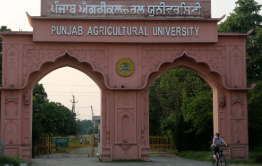
In a moment of pride for Indian agricultural academia, Punjab Agricultural University (PAU) has made it to the prestigious list of the top 100 agricultural universities in the world, according to the latest global rankings released this week by the QS World University Rankings by Subject – Agriculture & Forestry 2025.
This marks the first time that PAU has broken into the global top 100, a remarkable achievement that reflects the university’s growing influence in cutting-edge research, sustainable farming practices, and innovation-driven agricultural education. Ranked at #96, PAU now stands alongside some of the most reputed institutions globally, such as Wageningen University (Netherlands), UC Davis (USA), and China Agricultural University.
Vice-Chancellor Dr. Satbir Singh Gosal expressed immense satisfaction over the milestone, stating, “This is not just a win for PAU, but a proud moment for Punjab and Indian agriculture. Our dedicated faculty, students, and researchers have worked tirelessly to elevate the standards of education, research, and community outreach. This ranking is recognition of our sustained efforts to build a globally relevant institution.”
Over the past few years, PAU has significantly expanded its research in areas like climate-resilient crop varieties, organic farming, precision agriculture, and sustainable pest management. Its partnerships with international institutions and increased publication in high-impact journals have also contributed to the improved ranking.
The university’s robust extension network, which connects research directly with farmers across Punjab and beyond, was also a key factor in its recognition. Experts note that PAU’s ability to bridge the gap between lab and land has been central to its enduring legacy as a leader in India’s Green Revolution and its ongoing relevance in 21st-century agriculture.
The announcement has been met with celebration across Punjab’s academic and farming communities. Former students, many of whom hold prominent positions in agri-businesses, government agencies, and universities worldwide, have also congratulated the university for this historic achievement.
Punjab Chief Minister Bhagwant Mann applauded the university’s success, saying, “PAU has long been the pride of Punjab. This global recognition is a testament to its unwavering commitment to excellence and to serving our farmers.”
With this milestone, PAU is now planning further initiatives to enhance its global footprint, including dual-degree programs, collaborative research with international universities, and expanded digital education for remote and rural learners.
As PAU climbs the global ladder, it continues to carry forward its mission—to empower farmers, innovate in agricultural science, and nurture the next generation of agri-leaders for a food-secure future.


 By