In the heart of India, a quiet revolution is taking place — one that could reshape not only the lives of millions who rely on rivers and reservoirs but also the state’s position in India’s booming blue economy. Madhya Pradesh, under the leadership of Chief Minister Dr. Mohan Yadav, is on an ambitious mission: to elevate traditional fish farming into a modern, organized, high-tech industry that brings prosperity, employment, and self-reliance.
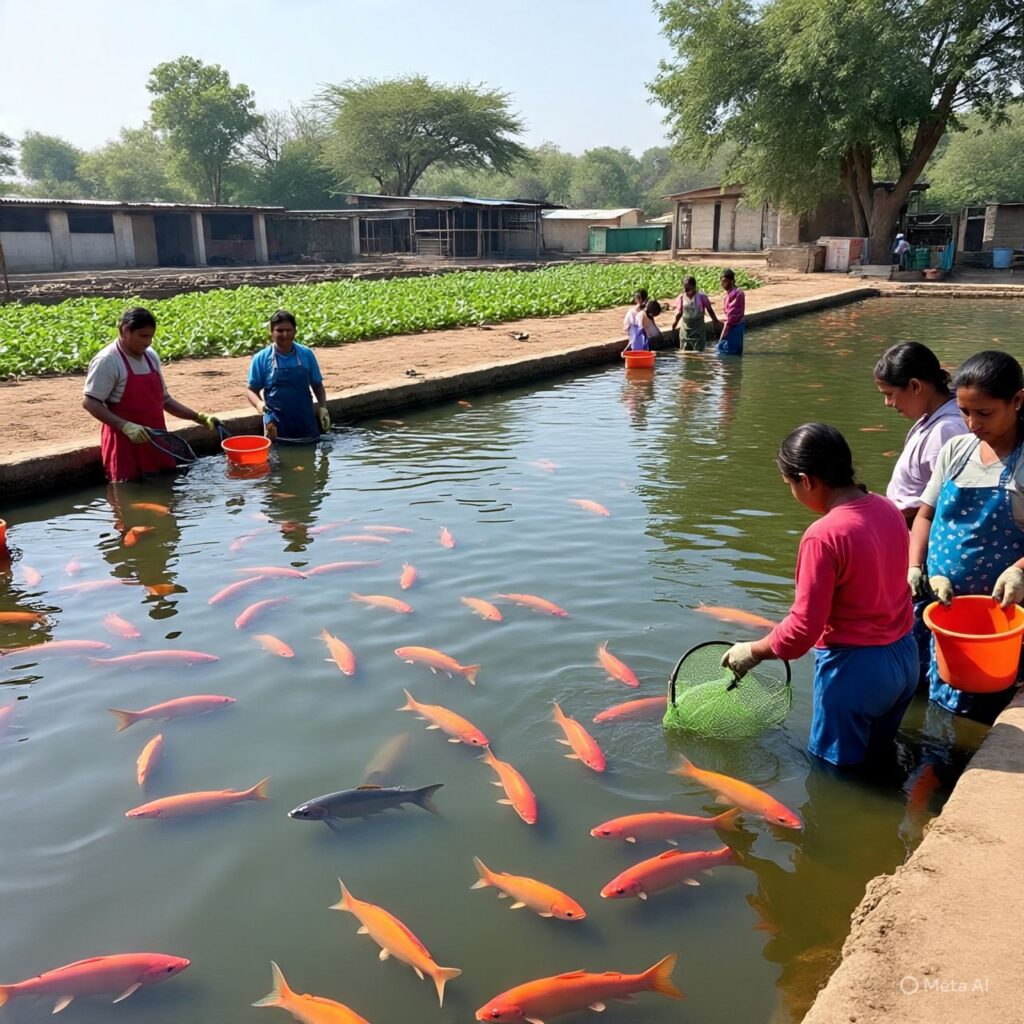
Fishing has long been seen as a traditional livelihood — a way of life tied to rivers, lakes, and community customs. But for the first time, the state government is positioning it as a robust, organized sector that deserves the same support as other industries. With investments in infrastructure, modern hatcheries, credit support, and new-age training, fish farming in Madhya Pradesh is no longer just about survival — it’s about scaling up, competing, and thriving.
A Community That Risks It All
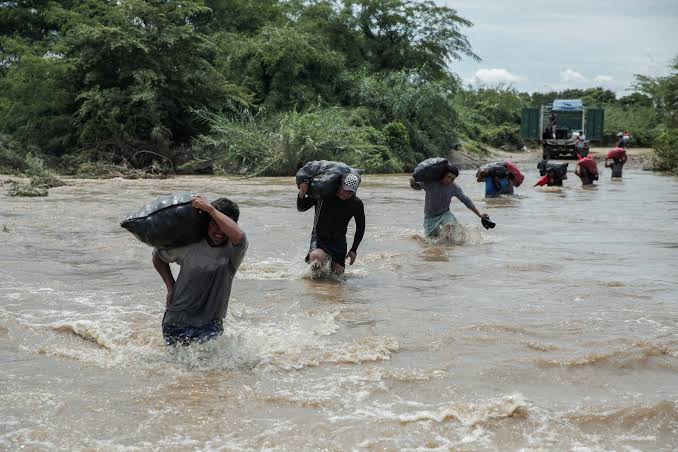
Speaking at the state-level Nishadraj Sammelan in Ujjain, Chief Minister Dr. Mohan Yadav acknowledged a truth too often overlooked: the fishing community puts its life at risk every single day. Fishermen brave deep waters, unpredictable weather, and physical exhaustion to ensure fish reach our kitchens and markets. It is a life of courage and skill — one that deserves respect and systematic support.
For generations, the Nishad community and other fishing castes have kept alive a delicate relationship with rivers and lakes. Yet, for decades, they have remained on the fringes of economic policy, working without recognition, modern facilities, or enough bargaining power. Dr. Yadav’s vision aims to change that by integrating the fishing community into the mainstream economy — and giving them the tools to flourish.
An Industry in the Making
At the heart of this transformation is the idea of giving fish farming the status of an industry. What does this mean in practice? Simply put, it means that fish farmers will now enjoy the same kinds of incentives, subsidies, schemes, and institutional backing that industries like manufacturing and dairy receive.
Speaking at the event, the Chief Minister announced that a state-of-the-art Aqua Park is being constructed in Bhopal at an investment of ₹40 crore. This modern fish park will serve as a hub for breeding, training, demonstration, and innovation — putting Madhya Pradesh firmly on the map for advanced aquaculture.
Alongside this, a new modern hatchery worth ₹217 crore will be established to produce high-quality fish seeds locally. For decades, local fish farmers have depended on states like West Bengal for fish seeds — an expensive and often uncertain supply chain. This dependency will soon be a thing of the past. With an in-state hatchery, farmers will have access to healthy, timely stock suited to local conditions.
Bringing Modern Technology to Traditional Practice
One of the standout features of this push is the way technology is being blended with age-old methods. In the past, fishing largely depended on seasonal catches from rivers and lakes. There was limited use of modern equipment, preservation facilities, or distribution networks.
Now, things are changing rapidly. The state government has distributed 430 motorcycles equipped with ice boxes to fishermen. This simple but powerful step will allow fish to reach local and regional markets faster and fresher, preventing spoilage and fetching better prices. It’s an example of how small, practical technology solutions can create huge benefits for grassroots workers.
The Cage Revolution: Tapping into Reservoir Potential
Another major step is the development of cage culture in large reservoirs. In the Indira Sagar reservoir alone, a massive 3360-cage fish farming project worth ₹92 crore has been launched. This approach uses floating cages installed in large water bodies to rear fish in controlled conditions. It dramatically boosts productivity compared to traditional open-water fishing.
With over three lakh cages planned in various reservoirs, Madhya Pradesh aims to unleash the vast untapped potential of its water resources — creating income streams for thousands of rural families while ensuring sustainable fish harvesting.
The Role of Smart Fish Parlors
An industry is only as strong as its market linkages. One of the biggest challenges fishermen face is the lack of organized marketing infrastructure. Many are forced to sell their catch to middlemen at low prices due to the absence of modern storage and retail outlets.
To solve this, the government is investing ₹22.65 crore to set up 453 Smart Fish Parlors. These modern retail units will ensure hygienic handling, storage, and sale of fish and fish products. It is expected to not only fetch better returns for producers but also provide consumers with safe, high-quality products.
Fishermen’s Credit: Financial Freedom
A recurring problem for small fishermen is lack of affordable finance. Often, they depend on informal loans at high interest rates, which traps them in cycles of debt.
To tackle this, the state is distributing Fishermen Credit Cards — a move inspired by the popular Kisan Credit Card for farmers. These cards give fish farmers access to easy, collateral-free loans to buy boats, nets, fuel, or expand their operations. This financial cushion allows them to plan better, invest in quality inputs, and handle emergencies without falling into debt traps.
Empowering Women, Enabling Startups
One remarkable aspect of the new fishery policy is the active focus on women’s participation. In Madhya Pradesh, over 2 lakh fish farmers are registered — and a significant number are women. Traditionally, women play a big role in fish processing, drying, and selling. The government is encouraging more women to step into modern fish farming and even launch aquaculture startups.
With training in modern machinery, value addition, and branding, women can move up the value chain — from catching fish to producing ready-to-eat fish products, packaging, and retailing under their own brands.
More Water, More Opportunities
No aquaculture push can succeed without secure water resources. Dr. Yadav highlighted the state’s achievements in expanding irrigation capacity. When his government came to power, only about 7 lakh hectares were irrigated. Today, this figure has grown to 55 lakh hectares — and the ambitious Parvati-Kalisindh-Chambal (PKC) link project will push this to an impressive 100 lakh hectares.
More irrigation means more ponds, tanks, and reservoirs — each a potential fish farm. The government plans to build more ponds in suitable areas to expand fish production sustainably and generate local jobs.
Honoring Heritage, Inspiring Future
The choice to hold the grand Nishadraj Sammelan in Ujjain was symbolic. Lord Nishadraj, revered for his loyalty and courage in Ramayana, is a cultural hero for India’s fishing communities. By invoking his legacy, the Chief Minister sent a clear message: fishing is not a marginal job, but a proud heritage that must be modernized, protected, and celebrated.
At the event, Dr. Yadav lit ceremonial lamps and offered flowers at Nishadraj’s statue, signaling a new dawn for fishermen’s welfare in the state.
Stronger Institutions, Faster Results
The Chief Minister’s ambitious roadmap is supported by robust institutional backing. The Madhya Pradesh Fishermen Welfare Board, led by President Sitaram Batham, is working at district and village levels to implement welfare schemes swiftly. According to Batham, new infrastructure like Nishad Manglik Bhavans (community halls) are also being built in various districts — places where fishing communities can gather, plan, and train.
The message is clear: under Dr. Yadav’s leadership, projects that dragged on for years are now being completed within months.
A Long-Term Vision for 2028 and Beyond
This surge of investment and policy support is not a one-time push. The government has laid out a roadmap till 2028 with clear goals: bring backward fishing communities into the mainstream, expand production capacity, ensure better prices for produce, create rural jobs, and position Madhya Pradesh as a national leader in fish production — just as it is emerging in milk production.
Challenges Ahead
While the vision is bold and the progress encouraging, challenges remain. For cage culture to thrive, water bodies must be sustainably managed. Pollution, overfishing, and conflicts over water use need careful regulation.
Fishermen must be trained in best practices — stocking densities, feed management, disease control — to ensure profitability does not come at the cost of ecology.
Logistics too will require strengthening: cold chains, transport, and processing facilities must expand alongside production.
A Model for India’s Blue Economy
What Madhya Pradesh is attempting can serve as a blueprint for other states. India’s fisheries sector holds immense untapped potential — especially inland aquaculture. Nationally, fisheries contribute about 1% to India’s GDP but employ over 14 million people directly or indirectly.
The central government, under the Pradhan Mantri Matsya Sampada Yojana (PMMSY), has already been pushing for modernization, diversification, and export growth. Madhya Pradesh’s state-level model complements this national goal.
Conclusion: A Prosperous, Modern Fishing Community
Chief Minister Dr. Mohan Yadav’s vision is not just about increasing fish output. It is about transforming the social and economic fabric of fishing communities. By combining modern infrastructure, smart retail, local hatcheries, financial empowerment, and cultural pride, the state is creating a future where fishing is not a last resort — but a lucrative, dignified, and respected profession.
As more young people, especially women, enter the sector with new skills and technology, fishing villages could become hubs of rural innovation and prosperity.
Madhya Pradesh’s fishery transformation is proof that with the right political will, clear policy, and community involvement, even traditional livelihoods can become sunrise industries. As these initiatives unfold in the coming years, they may well inspire other states to ride the same wave — towards a self-reliant, sustainable blue economy.


 By