

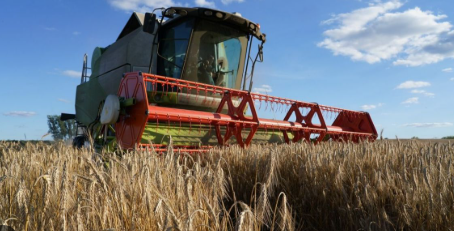
Ukraine’s Agriculture Minister Mykola Solskyi has issued a warning that the country’s grain harvest in 2025 is projected to decline by nearly 10%, citing a combination of extreme weather conditions, war-related disruptions, and shrinking cultivated areas as the primary causes.
The revised forecast is a significant setback for one of the world’s largest grain exporters and could have implications for global food prices, particularly in regions that rely heavily on Ukrainian grain supplies such as Africa, the Middle East, and parts of Asia.
Weather Extremes and War Disruptions
According to the Ministry of Agrarian Policy and Food, Ukraine expects to harvest approximately 58 million metric tons of grain this year, down from 64.4 million tons in 2024. Officials say an unusually dry spring, followed by erratic rainfall and lingering war impacts, have severely affected crop development, especially in southern and eastern regions.
“The climate variability this season has been extreme. In some areas, drought conditions persisted for weeks, while others faced flash floods and hailstorms,” said Minister Solskyi during a press briefing. “Add to that the ongoing logistical challenges due to military conflict, and we’re seeing a sharp decline in planted acreage and yield potential.”
The conflict with Russia continues to disrupt farming in key producing areas like Zaporizhzhia, Kherson, and parts of Donetsk. Many farmers have abandoned fields due to safety risks, labor shortages, or landmine contamination, further shrinking the country’s production base.
Export Pressures and Global Ripple Effects
Ukraine plays a vital role in global food supply, particularly for wheat, corn, and barley. The 2022 and 2023 seasons were heavily impacted by Russia’s blockade of Black Sea ports, leading to the creation of alternative corridors via Romania, Poland, and the Danube River. While partial export channels have since reopened, high transportation costs and risks continue to limit full recovery.
The estimated 10% drop in harvest has already triggered concerns among major importers. Countries in North Africa, Southeast Asia, and parts of Europe depend on Ukrainian grain for food security and price stability. Global wheat prices saw a modest uptick following the announcement, amid fears of tightening supply.
Domestic and International Response
The Ukrainian government has called on international partners to support efforts to maintain farming activities in war-affected zones. A joint appeal with the United Nations Food and Agriculture Organization (FAO) is underway to provide financial aid, seed reserves, and post-harvest infrastructure.
Minister Solskyi also highlighted ongoing efforts to invest in resilient agricultural technologies, including drought-tolerant seeds, satellite-based crop monitoring, and expanding silo storage near western border crossings to ease transport bottlenecks.
Despite the grim forecast, Ukrainian farmers remain determined. “We’ve worked through war, uncertainty, and natural disasters,” said Oleh Tkachenko, a wheat farmer from Odesa region. “We won’t give up. But we need help to keep going.”
Final Outlook
With Ukraine’s grain output projected to fall, global markets will be watching closely. The warning adds to mounting concerns over climate-related risks and geopolitical instability impacting food systems worldwide. Analysts suggest that international cooperation and strategic support will be crucial to safeguarding both Ukrainian agriculture and global food security in the coming months.


 By












