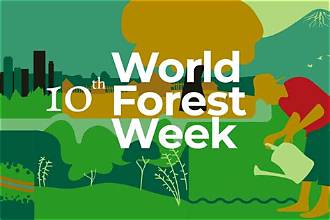
World Forest Week 2026 has begun in Rome, Italy, bringing together stakeholders to discuss the vital role of forests in food security, nutrition, biodiversity and resilient agrifood systems. The event is being held from September 28 to October 2, 2026, under the theme “Forests for food, resilience and prosperity.”
The week provides a platform for governments, international organizations, researchers, development partners and other stakeholders to discuss how forests can contribute to sustainable food systems and stronger rural livelihoods.
Forests and Food Security
Forests are closely connected with food production and rural livelihoods across many parts of the world. Millions of people depend on forests and forest landscapes for food, fuel, income and other essential resources.
Wild foods, fruits, nuts, seeds, mushrooms and other forest products can contribute to household nutrition, particularly for communities living in or near forest areas. Forest ecosystems can also support agricultural production by providing ecosystem services such as water regulation, soil protection and pollination.
The World Forest Week discussions are therefore examining forests not as separate from agriculture, but as an important component of broader agrifood systems.
Focus on Resilient Agrifood Systems
The theme of this year’s event places particular emphasis on resilience. Climate change, biodiversity loss, land degradation and other environmental pressures are creating challenges for food systems around the world.
Healthy forests can help strengthen resilience by protecting watersheds, reducing soil erosion, storing carbon and supporting biodiversity. Forest landscapes can also provide natural buffers against certain climate-related risks.
Integrating forest conservation and sustainable management with agricultural development can therefore contribute to more resilient rural economies and food systems.
Biodiversity and Nutrition
Biodiversity is another major focus of World Forest Week 2026. Forests contain a significant share of the world’s terrestrial biodiversity and provide habitats for a wide range of plant and animal species.
This biodiversity can also contribute to dietary diversity. A wider range of naturally available foods can provide important nutrients and complement agricultural food production.
The discussions in Rome are highlighting the need to consider nutrition and biodiversity alongside traditional measures of agricultural productivity.
Forests and Rural Livelihoods
For rural and indigenous communities, forests can be an important source of employment, income and traditional knowledge. Sustainable management of forest resources can create economic opportunities while helping maintain ecosystem health.
At the same time, pressures such as deforestation, land degradation and unsustainable resource use can threaten both ecosystems and the communities that depend on them.
World Forest Week provides an opportunity to discuss approaches that can balance economic development, food security and environmental conservation.
Building a More Sustainable Future
The “Forests for food, resilience and prosperity” theme reflects a broader recognition that forests are an integral part of global efforts to build sustainable and resilient food systems.
The discussions taking place in Rome from September 28 to October 2 are expected to bring greater attention to the links between forests, food security, nutrition, biodiversity, climate resilience and rural livelihoods.
As countries work toward more sustainable agrifood systems, integrating forest considerations into agricultural and development policies could become increasingly important. Protecting forests while ensuring that communities can benefit from them sustainably remains a key challenge for policymakers and stakeholders worldwide.

 By
By