

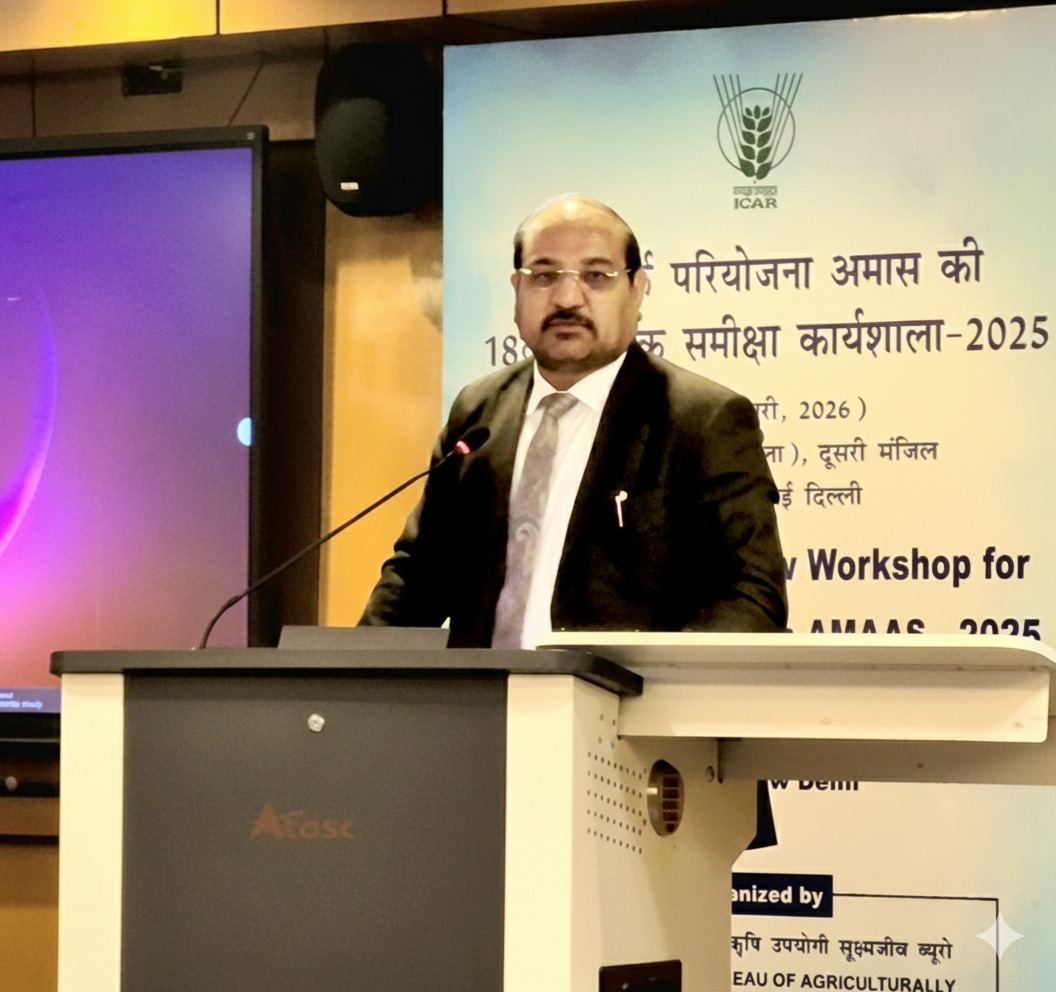
The 18th annual review meeting of the network project on the application of microbes in agriculture and allied sectors (AMAAS) was inaugurated on January 7, 2026, at the National Agricultural Science Centre (NASC), New Delhi. The meeting was chaired by Dr. M. L. Jat, Secretary (DARE) and Director General, Indian Council of Agricultural Research (ICAR).
In his inaugural address, Dr. Jat emphasized that microbes form the foundation of sustainable and regenerative agriculture. They play a critical role in improving soil health, enhancing nutrient use efficiency, mitigating the impacts of climate change, and linking agriculture with human and environmental health. He stressed that research should not remain confined to laboratories but should focus on developing integrated microbial solutions that are applicable in the field.
Dr. Jat further highlighted the need to align microbe-based technologies with national goals such as natural farming, crop residue management, reduced use of chemical fertilizers and pesticides, and self-reliance in pulses and oilseeds. He urged scientists to innovate keeping farmers’ real needs in mind so that the benefits of these technologies are visible at the farm level.
Dr. D. K. Yadav, Co-Chair of the meeting and Deputy Director General (Crop Sciences), ICAR, underscored the importance of results-oriented and translational research. He noted that better coordination between agriculture, environment, and health sectors is essential to develop solutions that have measurable impact and bring tangible improvements in farmers’ income, productivity, and resource conservation.
The two-day workshop is attended by scientists from 29 research centers across the country. The meeting aims to review progress made so far, strengthen collaboration, and chart the next phase of microbial innovations. This initiative is considered a significant step toward strengthening India’s sustainable agriculture, soil conservation, and environment-friendly farming practices.


 By
By











