

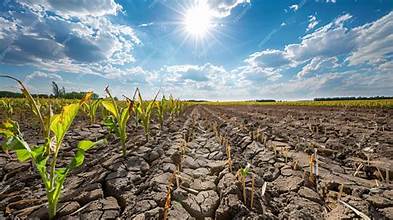
A prolonged spell of extreme drought and heat across the United States is taking a heavy toll on agriculture, damaging key crops, shrinking cattle herds, and driving up food prices. The situation is increasingly being viewed as a clear signal of the growing risks climate change poses to global food systems.
Large parts of major agricultural regions—including the Midwest and the Great Plains—have been experiencing below-average rainfall combined with unusually high temperatures. These conditions have severely affected staple crops such as corn, soybeans, and wheat. Soil moisture levels have dropped significantly, limiting plant growth and reducing yields. Farmers in several states report stunted crops and lower-than-expected harvest projections, raising concerns about supply shortages in the months ahead.
The livestock sector is also under pressure. Persistent drought has reduced the availability of pasture and feed, forcing ranchers to make difficult decisions. Many have begun selling off cattle earlier than planned due to rising feed costs and water shortages. This reduction in herd sizes is expected to have longer-term implications for meat supply, potentially leading to higher beef prices in domestic and global markets.
The economic impact is already being felt. Food prices in the United States have shown upward pressure as production challenges ripple through the supply chain. Higher costs for feed, water, and energy are increasing the overall cost of farming, which is ultimately passed on to consumers. Experts warn that if drought conditions persist, inflation in food prices could intensify further.
According to the National Oceanic and Atmospheric Administration, the frequency and intensity of extreme weather events, including droughts and heatwaves, have been increasing due to climate change. These shifts are creating more unpredictable growing conditions, making it harder for farmers to plan and manage their operations effectively.
The situation has prompted calls for stronger climate adaptation strategies within the agricultural sector. Farmers are increasingly turning to drought-resistant crop varieties, improved irrigation systems, and soil conservation practices to mitigate the impact of extreme weather. However, such adaptations often require significant investment and may not be immediately accessible to all producers.
In response, federal and state authorities are considering support measures, including financial aid, crop insurance adjustments, and emergency relief programs to help farmers cope with losses. At the same time, policymakers are emphasizing the need for long-term solutions that enhance resilience, such as sustainable water management and climate-smart agriculture.
The drought in the United States also has global implications. As one of the world’s largest agricultural producers and exporters, any significant decline in U.S. output can affect international markets. Reduced exports of grains and meat could tighten global supplies, contributing to price volatility and food insecurity in import-dependent countries.
Overall, the ongoing drought underscores the vulnerability of modern agriculture to climate extremes. It highlights the urgent need for coordinated efforts to strengthen resilience, invest in sustainable practices, and address the broader challenges posed by a changing climate to ensure long-term food security.


 By
By











