

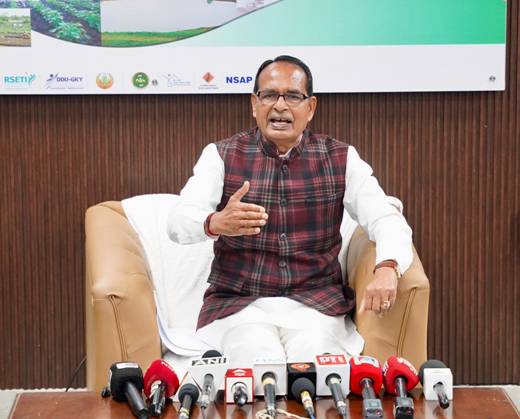
India has taken a major step toward strengthening farmer protection and seed quality with the introduction of the Seed Act 2026, Union Minister for Agriculture and Farmers’ Welfare and Rural Development Shivraj Singh Chouhan announced on Thursday. Addressing the media, the minister described the new law as a historic reform aimed at eliminating fake and substandard seeds while ensuring transparency across the seed supply chain.
Full Traceability to Protect Farmers
A key feature of the Seed Act 2026 is the introduction of a nationwide seed traceability system. Under the new framework, every seed packet will carry a QR code, allowing farmers to access complete information about the seed’s origin, production, distribution, and sale. By scanning the code, farmers will be able to identify the producer, dealer, and seller, making accountability clear at every stage.
According to the minister, this system will ensure that poor-quality or counterfeit seeds are quickly identified and removed from the market. “Once traceability is implemented, fake or defective seeds will not survive in the system. If they appear, responsibility can be fixed immediately,” he said.
Strict Penalties for Fake and Poor-Quality Seeds
The new law proposes stringent penalties for those involved in producing or selling substandard seeds. The maximum fine, earlier limited to nominal amounts, has now been proposed at up to ₹30 million, along with provisions for imprisonment of up to three years in cases of deliberate wrongdoing. The minister emphasized that while many seed companies operate responsibly, those who cheat farmers will face strict legal action.
Mandatory Registration of Seed Companies
To prevent unauthorized sales, the Seed Act 2026 makes registration mandatory for all seed companies and vendors. Only registered and approved entities will be allowed to sell seeds in the market. This move is expected to eliminate fake companies and unregulated sellers, ensuring that farmers receive seeds only from verified sources.
Traditional Seed Systems to Remain Unaffected
Addressing concerns raised by some groups, the minister clarified that the new law does not restrict farmers’ traditional seed practices. Farmers will continue to have the right to save, use, exchange, and share seeds among themselves. Local and community-based seed exchange systems, which are deeply rooted in rural traditions, will remain fully protected under the new legislation.
Support for Public and Domestic Seed Institutions
The Seed Act provides a balanced framework supporting public institutions such as ICAR, agricultural universities, and Krishi Vigyan Kendras (KVKs), alongside domestic private seed companies producing high-quality seeds. Foreign seeds will be allowed only after proper scientific evaluation and suitability testing, ensuring they meet Indian agricultural requirements.
Nationwide Farmer Awareness Campaign
To ensure effective implementation, the government is launching extensive farmer awareness initiatives, including the Viksit Krishi Sankalp Abhiyan. Scientists, agricultural officers, and progressive farmers will work together to educate farmers on seed quality, selection, and grievance redressal mechanisms. All 731 KVKs across the country will play a central role in this effort.
Modernizing a Decades-Old Law
The minister noted that the existing Seed Act dates back to 1966 and does not reflect modern technology or market realities. The new Seed Act 2026 introduces digital records, traceability, and stronger accountability, aligning seed regulation with current agricultural and technological needs.
States’ Powers Remain Intact
Reassuring state governments, the minister stated that agriculture remains a state subject and that states’ powers will remain unchanged. The central government will work in coordination with states to implement the law effectively.
Ensuring Quality Seeds for Every Farmer
Concluding his remarks, Shivraj Singh Chouhan said the ultimate goal of the Seed Act 2026 is to ensure that every farmer has access to safe, reliable, and high-quality seeds. “Encouraging honest companies and strictly punishing offenders is the essence of this law,” he said, calling it a decisive step toward protecting farmers’ interests and improving agricultural productivity.


 By
By











