

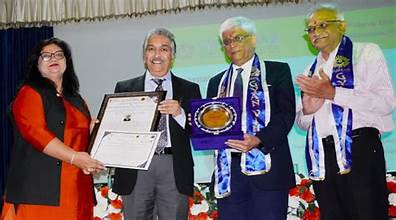
Prof. Bansal’s scientific journey has been deeply rooted in addressing one of the most pressing global challenges—ensuring food security in the face of climate change. His pioneering work integrates functional genomics, genetic engineering, and genome editing to develop crop varieties that can withstand environmental stresses such as drought, heat, and salinity. His research has significantly contributed to improving staple crops like wheat and chickpea, which are vital for food systems across Asia, Africa, and the Middle East.
One of his major contributions includes the identification of trait-specific genetic resources that enhance climate resilience. These have become essential tools for breeding programs worldwide. Additionally, his work in discovering and cloning stress-tolerance genes has enabled the development of transgenic crops capable of thriving under adverse conditions. A notable example is the development of a transgenic rubber variety incorporating the osmotin gene, currently under field trials in collaboration with the Rubber Research Institute of India.
Beyond laboratory research, Prof. Bansal has played a crucial role in strengthening India’s agricultural innovation ecosystem. As Director of National Bureau of Plant Genetic Resources (NBPGR) from 2010 to 2016, he managed one of the world’s largest repositories of plant genetic material. His leadership ensured the conservation as well as strategic utilization of genetic resources for future crop improvement.
He was also instrumental in establishing the ICAR National Transgenic Crop Network, which facilitated the sharing of advanced genetic tools among research institutions, including ICAR institutes, CSIR labs, and universities. This collaborative approach accelerated the development of improved crop varieties across diverse agro-climatic regions in India.
On the global stage, Prof. Bansal served as Vice-Chair for Asia at the UN Commission on Genetic Resources for Food and Agriculture, where he represented India’s scientific perspective in international policy discussions.
In addition to his scientific achievements, he has been a strong advocate for progressive regulatory frameworks in agricultural biotechnology. His efforts have contributed to simplifying biosafety norms for genome-edited crops and establishing standard procedures for their commercialization, thereby bridging the gap between research and field-level adoption.
Currently, as Chairman of the ICAR-NASF Technical Advisory Committee for the CRISPR Crop Network, Prof. Bansal continues to guide India’s research agenda in genome editing—one of the most transformative technologies in modern agriculture.
The Lifetime Achievement Award stands as a testament to his enduring impact on science, policy, and sustainable agriculture, inspiring future generations to pursue innovation with purpose.


 By
By











