

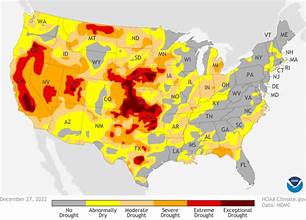
A historic winter drought combined with an intense heatwave is creating a serious crisis for agriculture across the United States, threatening both domestic crop production and global food stability. Reports indicate that nearly 60 percent of the country is currently experiencing drought conditions, making it one of the most widespread dry spells in recent years.
The extreme weather has already begun to damage key crops such as wheat, rice, and peanuts—commodities that play a crucial role not only in the U.S. food system but also in international markets. Farmers in major agricultural states are struggling with reduced soil moisture, poor crop growth, and declining yields. The lack of sufficient winter precipitation, which is essential for replenishing soil and water reserves, has further worsened the situation.
Agricultural experts warn that if these conditions persist, crop output could fall significantly, leading to supply shortages. This, in turn, may push food prices higher, impacting both consumers and food-importing countries worldwide. The United States is one of the largest exporters of agricultural products, so any disruption in its production has ripple effects across global markets.
The drought has also increased irrigation costs, as farmers are forced to rely more heavily on groundwater and other limited water resources. In many regions, water levels are already under stress, raising concerns about long-term sustainability. Livestock farmers are also facing difficulties due to reduced availability of feed and water, adding to the overall pressure on the agricultural sector.
Global organizations such as the Food and Agriculture Organization (FAO) have warned that ongoing climate-related disruptions, combined with geopolitical tensions, could further intensify food price volatility in the coming months. Any prolonged weather crisis in a major producer like the U.S. is likely to have a direct impact on global food supply chains.
Meanwhile, countries like India are monitoring the situation closely. According to officials, India is confident of maintaining higher agricultural output this year, which could help stabilize global supply to some extent. However, experts caution that relying on a few countries to balance global demand is not a long-term solution.
The current drought highlights the growing vulnerability of agriculture to climate change. Scientists emphasize the need for climate-resilient farming practices, improved water management, and sustainable crop planning to mitigate such risks in the future.
As the situation continues to evolve, the global agricultural community remains on alert. If weather conditions do not improve soon, the impact of this drought could extend far beyond the United States, affecting food availability and prices across the world.


 By
By











