

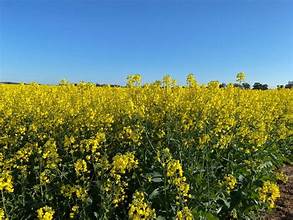
Australia is expected to witness a significant decline in its canola production for the 2026–27 season, with projections indicating a drop of nearly 19%. The anticipated fall is largely attributed to rising fuel and fertilizer costs, which have surged due to ongoing global geopolitical tensions, placing additional financial strain on farmers.
Canola, one of Australia’s most important oilseed crops, plays a vital role in both domestic agriculture and international trade. The country is a major exporter of canola, supplying key markets in Asia and Europe for use in edible oils, animal feed, and biofuels. A decline in output could therefore have notable implications for global oilseed supply and pricing dynamics.
The primary factor behind the projected reduction is the sharp increase in input costs. Fuel prices have risen considerably, impacting farm operations such as planting, irrigation, and harvesting. At the same time, fertilizer costs have escalated, making it more expensive for farmers to maintain optimal crop nutrition. These combined pressures are leading many growers to scale back canola planting in favor of less input-intensive crops.
Industry analysts note that high production costs are altering cropping decisions across major agricultural regions in Australia, particularly in Western Australia and New South Wales, where canola is widely cultivated. Farmers are increasingly prioritizing cost management and risk reduction, which is likely to result in a contraction of the total area under canola cultivation.
In addition to economic factors, uncertainty around weather conditions is also influencing production outlooks. While Australia has experienced favorable seasons in recent years, variability in rainfall and the risk of dry spells remain ongoing concerns. Reduced investment in inputs due to high costs could further amplify the impact of any adverse weather conditions, leading to lower yields.
The expected decline in canola output may have broader consequences for global vegetable oil markets. With Australia being a key exporter, reduced supply could contribute to tighter availability and upward pressure on prices, particularly if other major producers face simultaneous challenges. This could affect industries ranging from food processing to biofuel production.
Domestic implications are also significant. Lower production could impact farm incomes and rural economies, especially in regions heavily dependent on oilseed cultivation. Additionally, processors and exporters may face supply constraints, potentially affecting Australia’s competitiveness in international markets.
In response to these challenges, agricultural experts are emphasizing the need for improved efficiency and innovation. Adoption of precision farming techniques, better input management, and the use of resilient crop varieties are being encouraged to help farmers cope with rising costs and maintain productivity. Policy support and targeted subsidies may also play a role in cushioning the impact on growers.
Despite the projected decline, Australia’s canola sector remains fundamentally strong, supported by advanced farming systems and established export networks. However, the current outlook highlights the vulnerability of agricultural production to global economic and geopolitical developments.
As the 2026–27 season approaches, the focus will be on how farmers adapt to the evolving cost environment and whether market conditions stabilize. The outcome will not only shape Australia’s agricultural performance but also influence global oilseed supply trends in the coming year.


 By
By











