

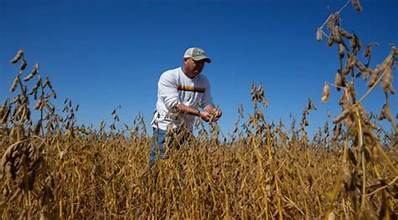
Soybean farmers in the United States are facing mounting challenges as a combination of low market prices, rising input costs, and ongoing trade tensions continues to squeeze profitability. The situation has raised concerns across the agricultural sector, with many growers struggling to maintain margins in an increasingly competitive global market.
Over the past year, soybean prices have remained under pressure due to ample global supplies and fluctuating demand. At the same time, farmers are grappling with significantly higher input costs, including fertilisers, fuel, seeds, and equipment. These rising expenses have eroded profit margins, leaving many producers in a financially vulnerable position.
Trade dynamics have further complicated the outlook. Export opportunities for US soybeans have been affected by shifting global trade relationships and policy uncertainties. Disruptions and tariffs in key markets have made it harder for American farmers to compete internationally, particularly against lower-cost producers.
A major factor intensifying the pressure is the growing dominance of Brazil in the global soybean trade. Brazil has steadily expanded its production and export capacity, benefiting from favorable weather conditions, large-scale farming operations, and competitive pricing. As a result, it has captured a larger share of key export markets, including China, traditionally a major buyer of US soybeans.
Industry analysts note that Brazil’s logistical improvements, including better port infrastructure and transportation networks, have further strengthened its position. This has made it increasingly difficult for US exporters to match both price and efficiency, putting additional strain on American farmers.
Back home, unpredictable weather patterns and climate-related risks have added another layer of uncertainty. Farmers must carefully balance planting decisions with cost considerations, often reducing acreage or seeking alternative crops to manage risk. However, switching crops is not always a viable option due to market conditions and existing investments.
The US government has introduced various support measures over time, including subsidies and insurance programs, to help farmers cope with volatility. However, many producers argue that these measures provide only temporary relief and do not address the structural challenges facing the sector.
Experts suggest that long-term solutions will require a multifaceted approach. Strengthening trade relationships, investing in agricultural innovation, and improving supply chain efficiency could help US farmers regain competitiveness. Additionally, expanding access to emerging markets may offer new opportunities for growth.
Despite the current difficulties, US soybean farmers remain resilient and continue to adapt to changing conditions. Advances in technology, precision farming, and sustainable practices are helping some producers improve efficiency and reduce costs.
In conclusion, the challenges facing US soybean farmers highlight the complex interplay of global trade, input costs, and market competition. With Brazil maintaining its stronghold in exports and cost pressures persisting, the road ahead remains challenging. However, with the right policy support and strategic adjustments, the sector can navigate these headwinds and work toward a more sustainable future.


 By
By











