

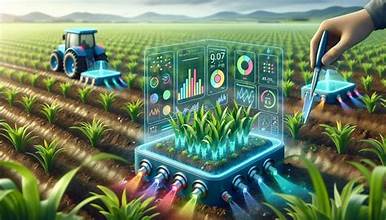
The rapid adoption of artificial intelligence (AI) in agriculture is transforming farming practices worldwide, but it is also raising serious concerns among experts about long-term sustainability, biodiversity, and farmer autonomy. While AI-powered tools promise higher efficiency and productivity, critics warn that an overreliance on big tech-driven solutions could create new risks for global food systems.
AI technologies are increasingly being used in precision farming, crop monitoring, pest control, and yield prediction. These tools, often developed by large multinational corporations, rely on vast datasets, satellite imagery, and machine learning algorithms to optimize farm operations. Supporters argue that such innovations can help farmers make better decisions, reduce input waste, and improve overall efficiency.
However, experts caution that the widespread use of standardized, data-driven farming practices may lead to reduced biodiversity. AI systems often promote uniform crop varieties and farming techniques that maximize yield under specific conditions. This can discourage the cultivation of diverse crops and traditional farming methods, ultimately weakening ecosystem resilience.
Another major concern is the growing dependency of farmers on large technology companies. As AI platforms become more integrated into agricultural operations, farmers may find themselves reliant on proprietary software, subscription-based services, and expensive digital infrastructure. This could limit their control over farm data and decision-making processes, shifting power toward corporations.
Organizations such as the Food and Agriculture Organization have highlighted the need for balanced and inclusive adoption of digital agriculture. They emphasize that while AI has the potential to address challenges like climate change and food security, it must be implemented in a way that protects smallholder farmers and promotes equitable access to technology.
Data ownership and privacy have also emerged as critical issues. Many AI-driven platforms collect detailed information about soil health, crop performance, and farm management practices. Without clear regulations, there is a risk that this data could be controlled or exploited by corporations, leaving farmers with limited bargaining power.
In developing regions, the digital divide further complicates the situation. Small-scale farmers in parts of Asia and Africa may lack access to the infrastructure, training, and financial resources needed to adopt AI technologies. This could widen existing inequalities in the agricultural sector, with large, tech-enabled farms gaining a competitive advantage.
Environmentalists also warn that excessive reliance on AI-driven optimization could encourage intensive farming practices that prioritize short-term gains over long-term sustainability. Increased use of chemical inputs, monocropping, and land consolidation could harm soil health, reduce biodiversity, and contribute to environmental degradation.
Despite these concerns, many experts agree that AI can play a positive role if used responsibly. The focus, they argue, should be on developing open-source technologies, strengthening regulations, and ensuring that farmers retain control over their data and farming decisions. Collaborative approaches involving governments, research institutions, and local communities will be essential to achieving this balance.
In conclusion, while AI is reshaping the future of agriculture, its unchecked expansion could pose significant risks. As global adoption accelerates, policymakers and stakeholders must ensure that technological progress does not come at the cost of biodiversity, farmer independence, and long-term sustainability.


 By
By











