

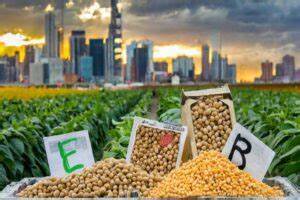
Global agricultural commodity markets are currently witnessing mixed trends, with soybean prices showing signs of stabilization amid declining oil prices and shifting currency dynamics. This development is offering a degree of राहत to farmers and agribusinesses by slightly easing input cost pressures that had intensified over recent months.
Soybeans, a key global commodity used for both food and animal feed, have experienced significant volatility in recent times. However, the recent softening in crude oil prices has played a crucial role in stabilizing the market. Since soybeans are closely linked to the biofuel industry—particularly biodiesel—lower oil prices tend to reduce demand pressure, leading to more balanced pricing.
Currency fluctuations have also contributed to the stabilization trend. A stronger U.S. dollar in certain trading periods has made American agricultural exports relatively more expensive, reducing global demand slightly and helping cool down prices. At the same time, currency adjustments in major importing countries have influenced purchasing patterns, contributing to a more stable market environment.
The Chicago Board of Trade, a key global benchmark for agricultural commodities, has reflected these stabilizing trends in soybean futures. Analysts note that while prices are not falling sharply, the reduced volatility is a positive signal for market participants who have been dealing with uncertainty driven by geopolitical tensions, supply chain disruptions, and fluctuating energy markets.
For farmers, this stabilization brings some relief. Lower volatility in soybean prices helps in better planning and risk management, especially during planting and harvesting cycles. Additionally, easing prices of related inputs—such as fuel and fertilizers—can improve overall farm profitability, even if margins remain tight.
However, experts caution that the situation remains fragile. Global commodity markets are still highly sensitive to external shocks, including weather conditions, geopolitical developments, and policy changes in major producing and consuming countries. Any sudden disruption—such as adverse weather in key growing regions like Brazil or the United States—could quickly reverse the current trend.
Moreover, while soybean prices are stabilizing, other commodities continue to show mixed movements. Wheat and corn markets, for instance, are still reacting to supply uncertainties and export dynamics. This uneven performance across commodities highlights the complexity of global agricultural markets, where multiple interconnected factors influence price behavior.
Overall, the current trend offers a cautious sense of stability in an otherwise volatile environment. The easing of soybean prices, supported by lower oil prices and currency shifts, is helping reduce pressure on agricultural markets. However, sustained stability will depend on broader global conditions, including energy markets, trade flows, and climatic factors, all of which continue to shape the future of global agriculture.


 By
By











