

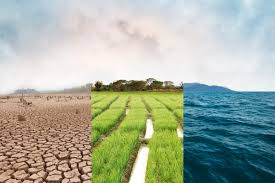
New international research has revealed that global croplands are responsible for nearly 5% of worldwide greenhouse gas emissions, increasing pressure on governments and the agriculture industry to accelerate the adoption of climate-smart farming practices.
The study identifies major crops such as rice, wheat, corn, and oil palm as some of the largest contributors to agricultural emissions due to intensive cultivation methods, fertilizer use, land-use changes, and methane release from flooded rice fields. Researchers warn that without major reforms in farming systems, agricultural emissions could continue rising alongside growing global food demand.
Rice cultivation remains a major concern because flooded paddy fields release significant amounts of methane, a greenhouse gas far more potent than carbon dioxide over shorter time periods. Countries across Asia, where rice is widely cultivated, are being encouraged to adopt water-saving and low-emission farming methods to reduce methane production.
The report also highlights that wheat and corn production contribute heavily to emissions through extensive fertilizer application and energy-intensive farming operations. Nitrogen fertilizers are a major source of nitrous oxide emissions, another highly powerful greenhouse gas linked to global warming.
Meanwhile, oil palm cultivation continues to face criticism due to deforestation and land conversion in tropical regions, particularly in parts of Southeast Asia. Environmental experts warn that clearing forests for plantation expansion not only increases carbon emissions but also threatens biodiversity and ecosystem stability.
Scientists involved in the research are calling for stronger implementation of climate-smart agriculture practices to reduce the environmental footprint of global food production. Recommended measures include precision fertilizer management, conservation agriculture, alternate wetting and drying techniques in rice farming, agroforestry systems, and improved soil carbon management.
Agricultural policymakers are also being urged to increase investments in sustainable farming technologies, low-emission crop varieties, and carbon-efficient supply chains. Researchers believe that balancing food security with climate goals will become one of the defining agricultural challenges of the coming decades.
The study further notes that climate change itself is already affecting crop productivity through rising temperatures, droughts, floods, and unpredictable weather patterns. This creates a growing cycle in which agriculture contributes to climate change while simultaneously becoming more vulnerable to its impacts.
Environmental economists argue that reducing crop-related emissions will require coordinated international action involving governments, agribusinesses, researchers, and farmers. Stronger policies, carbon reduction incentives, and climate-focused agricultural investments are expected to play a critical role in future food system transformation.
As global attention increasingly shifts toward sustainable development and climate resilience, the latest findings are likely to intensify debates over how the agricultural sector can feed a growing population while significantly lowering its environmental impact.


 By
By











