

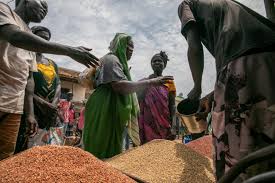
A new joint report led by the Food and Agriculture Organization has warned that Africa is facing a widening agriculture financing gap and rising food insecurity, with millions of people remaining vulnerable to hunger and malnutrition across the continent.
The assessment stresses that urgent and large-scale investment is needed to transform Africa’s agrifood systems, strengthen rural economies, and improve long-term food security. According to the report, limited private sector participation, weak infrastructure, and inadequate agricultural financing are slowing progress toward sustainable agricultural development.
Experts involved in the study noted that hunger levels in several African countries continue to rise due to a combination of climate shocks, economic instability, conflicts, and high food prices. Droughts, floods, and erratic rainfall linked to climate change are severely affecting crop production and livestock systems, particularly in vulnerable rural communities heavily dependent on agriculture.
The report also highlights that many African farmers still lack access to affordable credit, crop insurance, quality seeds, irrigation systems, storage infrastructure, and modern agricultural technologies. As a result, agricultural productivity in several regions remains below global averages despite the continent’s vast agricultural potential.
A major concern identified in the report is the low level of private investment flowing into African agriculture and food systems. Investors often view the sector as high-risk because of climate uncertainty, weak market infrastructure, and limited policy support. This has created a significant financing gap that is restricting innovation and slowing agrifood transformation efforts.
The report calls for stronger collaboration between governments, development institutions, financial organizations, and private companies to mobilize sustainable financing for agriculture. Experts argue that increasing investment in rural infrastructure, research, climate adaptation, and digital agriculture could significantly improve productivity and strengthen food supply chains.
Special attention is also being given to youth and women in agriculture, as the report emphasizes the need for inclusive growth and job creation in rural areas. Expanding access to financial services and agricultural training is considered critical for improving livelihoods and boosting local food production.
Agricultural economists warn that without immediate intervention, Africa could face deeper food insecurity and increased dependence on food imports in the coming years. Rising population growth and climate-related production risks are expected to place additional pressure on already fragile food systems.
The FAO-led assessment concludes that transforming Africa’s agrifood sector will require long-term policy commitment, stronger public-private partnerships, and major investments in climate-resilient and sustainable agriculture. Experts believe such efforts are essential not only for reducing hunger but also for driving economic growth and improving resilience across the continent.


 By
By











