

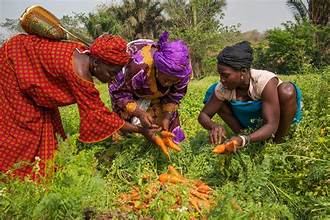
The Food and Agriculture Organization (FAO) has launched a major global initiative aimed at empowering women in agriculture after declaring 2026 as the “International Year of the Woman Farmer.” The initiative seeks to improve gender equality, strengthen rural livelihoods, and increase women’s participation across global agrifood systems at a time when food security and sustainable agriculture are becoming increasingly important worldwide.
The FAO announced that the year-long campaign will focus on recognizing the critical role women play in food production, rural economies, natural resource management, and household nutrition. Despite contributing significantly to global agriculture, women farmers in many countries continue to face barriers related to land ownership, access to credit, technology, education, markets, and decision-making opportunities. (fao.org)
According to FAO estimates, women make up nearly half of the agricultural workforce in several developing regions, particularly in Asia and Africa. In many rural communities, women are heavily involved in crop cultivation, livestock management, fisheries, food processing, and seed preservation. However, gender inequality often limits their productivity and income potential.
The new initiative aims to address these long-standing challenges through targeted policies, financial inclusion programs, training, and support for women-led agricultural enterprises. FAO officials say empowering women farmers could significantly improve food production, reduce poverty, and strengthen resilience against climate change and economic shocks.
FAO Director-General Qu Dongyu emphasized that women are central to building sustainable and inclusive agrifood systems. He noted that greater investment in women farmers would not only improve rural livelihoods but also contribute to global food security and nutrition goals. (unwomen.org)
The initiative will promote equal access to agricultural resources such as land, irrigation, fertilizers, climate-smart technologies, digital tools, and financial services. Special attention will also be given to improving women’s participation in agricultural leadership, cooperatives, and policymaking processes.
Experts say gender inequality remains one of the biggest hidden challenges in global agriculture. Studies have shown that if women had the same access to productive resources as men, farm yields could increase substantially, helping reduce hunger and poverty in vulnerable regions. Agricultural economists believe empowering women farmers could become a key strategy for improving global food systems under growing climate and economic pressures.
The campaign will also highlight the role of women in adapting agriculture to climate change. Women farmers are increasingly leading community-level efforts in sustainable farming, water conservation, seed diversity, and nutrition-sensitive agriculture. FAO officials say strengthening women’s knowledge and leadership can improve resilience in rural communities facing droughts, floods, and rising temperatures.
International agencies and development organizations are expected to collaborate with governments, research institutions, and farmer groups throughout 2026 to implement programs under the initiative. Activities will include training workshops, policy dialogues, rural entrepreneurship programs, awareness campaigns, and investments aimed at improving economic opportunities for women in agriculture.
Rural advocacy groups have welcomed the announcement, describing it as an important step toward recognizing the contribution of women farmers who have historically received less institutional support despite their essential role in food production.
As global agriculture faces mounting challenges from climate change, conflict, and food insecurity, the FAO says the International Year of the Woman Farmer will focus on building more inclusive, equitable, and resilient agrifood systems capable of supporting future generations.


 By
By











