

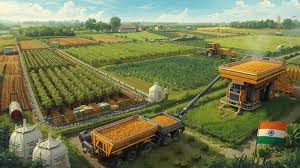
Demand for farm credit is expected to remain strong through the 2026–27 financial year, driven by rising production costs, expanding agricultural activities, and continued investments in farm modernization. Industry analysts believe that access to timely and affordable financing will play a crucial role in helping farmers maintain productivity, adopt new technologies, and strengthen resilience against market and climate-related challenges.
Agriculture today requires significant capital not only for purchasing seeds, fertilizers, crop protection products, and machinery but also for investing in irrigation systems, storage facilities, renewable energy solutions, and precision farming technologies. As input costs remain elevated and producers seek to improve efficiency, many are expected to rely on institutional credit to support both short-term operational needs and long-term development plans.
Financial institutions have reported sustained interest in agricultural lending across a wide range of farming activities, including crop production, horticulture, livestock, dairy, fisheries, and agribusiness enterprises. This trend reflects growing confidence in the sector and the increasing willingness of farmers to invest in productivity-enhancing assets.
One of the key drivers behind rising credit demand is the adoption of modern farming practices. Farmers are increasingly purchasing advanced machinery, automated irrigation equipment, drones, digital monitoring systems, and climate-smart technologies that require substantial upfront investment but can improve yields and reduce long-term operating costs. Access to credit enables producers to make these investments without placing excessive pressure on working capital.
Higher expenditure on essential farm inputs is also contributing to the need for financing. Fluctuations in fertilizer prices, fuel costs, labor expenses, and transportation charges have increased the overall cost of cultivation in many regions. Seasonal loans and crop finance programs help farmers manage these expenses while ensuring timely planting and harvesting operations.
In addition to traditional crop farming, credit demand is expected to grow in allied sectors such as dairy, poultry, aquaculture, and food processing. Investments in value addition, cold storage, supply chain infrastructure, and post-harvest management are creating new opportunities for rural entrepreneurs and agribusinesses, further expanding the need for financial support.
Government initiatives aimed at strengthening rural infrastructure and promoting financial inclusion have also encouraged greater participation in formal credit systems. Many producers who previously relied on informal borrowing are increasingly accessing loans through banks, cooperative institutions, and specialized agricultural finance programs offering competitive interest rates and structured repayment options.
Economists note that sustained credit availability can accelerate rural development by enabling farmers to diversify production, improve market access, and adopt sustainable agricultural practices. Investments in water-efficient irrigation, soil conservation, renewable energy, and precision nutrient management not only enhance profitability but also contribute to environmental sustainability.
However, experts emphasize that responsible lending and effective risk management remain essential. Climate variability, fluctuating commodity prices, and extreme weather events can affect farm incomes and repayment capacity. Financial institutions are therefore expanding the use of crop insurance, digital monitoring tools, and data-driven credit assessment models to better manage agricultural lending risks.
The continued expansion of agricultural credit is also expected to support younger farmers and agri-entrepreneurs entering the sector with innovative business models. Technology-based startups focusing on digital marketplaces, farm services, and smart agriculture are increasingly seeking financing to scale their operations and improve support for rural communities.
Looking ahead to FY2026–27, analysts anticipate that robust demand for farm loans will remain a key indicator of ongoing investment and confidence in agriculture. With appropriate financial support, policy initiatives, and technological innovation, increased access to credit can help strengthen farm incomes, boost productivity, and drive the modernization of the agricultural sector while enhancing long-term food security and economic growth.


 By
By











