

The ICAR–Indian Agricultural Research Institute (ICAR–IARI), New Delhi, has taken a major step toward strengthening India’s agricultural research ecosystem with the foundation stone laid for two next-generation research infrastructures — the “Crop Accelerator” and the “Crop Screen (Hi-Tech Glass House)”. Designed to fast-track crop improvement, enhance climate-resilient agriculture, and support advanced breeding technologies, these facilities are expected to significantly boost India’s scientific capacity in the coming years.
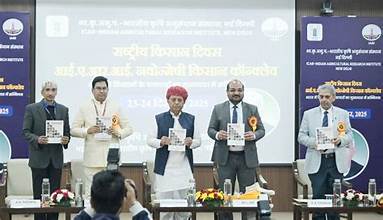
The foundation stone was laid by Dr. M. L. Jat, Secretary of the Department of Agricultural Research and Education (DARE) and Director General of the Indian Council of Agricultural Research (ICAR). The event was attended by Dr. D. K. Yadav, Deputy Director General (Crop Science), Dr. Ch. Srinivasa Rao, Director of ICAR–IARI, along with senior scientists, institutional staff, and research scholars. The ceremony marked an important milestone in IARI’s ongoing efforts to modernize and expand its research infrastructure.
Crop Accelerator: A Breakthrough Facility for Rapid Crop Development
The proposed Crop Accelerator aims to revolutionize the pace at which new crop varieties are developed in India. Traditional plant breeding cycles often take several years to deliver improved varieties, but this facility integrates advanced genomic tools, controlled environments, and rapid generation technologies to dramatically shorten this timeline.
Once operational, the Crop Accelerator will:
• Reduce the breeding cycle and accelerate the development of improved crop varieties
• Strengthen genomic selection, phenotyping efficiency, and precision breeding
• Support the development of climate-resilient, high-yielding, and pest- and disease-tolerant varieties
• Provide a controlled, data-rich environment for multi-disciplinary crop research
Scientists believe the facility will enhance India’s global competitiveness in modern plant science. With climate variability posing increasing risks to agriculture, rapid breeding systems such as this are essential to ensure stable food production and timely delivery of innovations to farmers.
Crop Screen (Hi-Tech Glass House): Advanced Research Under Controlled Conditions
The second facility, the Crop Screen (Hi-Tech Glass House), is designed to provide an advanced controlled-environment research platform. Equipped with precision environmental controls, the glass house will allow scientists to simulate diverse climatic scenarios and study crop responses with unprecedented accuracy.
Key capabilities of the facility include:
• Detailed assessment of crop growth, development, and stress tolerance under controlled environmental conditions
• Simulation of climate extremes such as drought, heatwaves, cold stress, or high humidity
• High-resolution phenotyping and continuous monitoring for disease, pest, and nutrient response studies
• Generation of robust, reproducible datasets crucial for modern crop improvement programs
This infrastructure is particularly valuable for climate-smart agriculture research, enabling scientists to predict how crop varieties may perform under future climate scenarios and to develop stronger, more adaptable cultivars.
Leadership Perspectives
Speaking at the event, Dr. M. L. Jat emphasized that these new facilities will position India at the forefront of global agricultural research. He highlighted that the challenges posed by climate change — including rising temperatures, unpredictable rainfall patterns, and increased incidence of pests and diseases — require technological solutions driven by modern science.
Dr. D. K. Yadav noted that the two facilities would substantially enhance ICAR’s crop science programs, enabling scientists to work with greater precision and efficiency. ICAR–IARI Director Dr. Ch. Srinivasa Rao added that the institute remains committed to building a strong scientific infrastructure that directly contributes to national food and nutritional security.
A Strategic Investment in India’s Agricultural Future
The establishment of the Crop Accelerator and Hi-Tech Glass House marks a forward-looking investment in India’s research landscape. These platforms will empower scientists to conduct high-quality experiments, generate actionable insights, and deliver improved technologies to farmers faster than ever before.
With global agriculture facing unprecedented challenges, such advanced infrastructure is essential to sustain productivity growth, enhance resilience, and ensure long-term food security. As the facilities move toward completion, ICAR–IARI reaffirms its commitment to supporting innovation, scientific excellence, and the nation’s agricultural progress.


 By
By











