

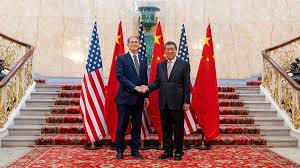
The United States and China are reportedly moving closer to a fresh round of agricultural trade discussions that could pave the way for increased American farm exports, particularly soybeans. The talks are gaining attention ahead of a possible summit between Chinese President Xi Jinping and former U.S. President Donald Trump, raising hopes of improved trade relations between the world’s two largest economies.
According to market observers, officials from both countries are exploring a new agricultural trade framework aimed at stabilizing bilateral trade and rebuilding confidence among exporters and buyers. U.S. farmers, especially soybean growers, are closely watching the negotiations, as China remains one of the largest global importers of agricultural commodities.
Soybeans are expected to remain at the center of the discussions. Over the past decade, China has been a major destination for U.S. soybean exports, supporting American farmers and agribusinesses. However, trade tensions, tariffs, and shifting supply chains in recent years have significantly affected export volumes and market stability.
Industry analysts believe that any new agreement could provide short-term support to U.S. agricultural exports, but the overall impact may be more limited than previous trade deals. One major reason is the slowing growth in China’s soybean demand. Experts point out that changes in livestock production, improvements in feed efficiency, and a more cautious economic environment in China are reducing the pace of soybean import growth.
In addition, China has diversified its sourcing strategy by increasing imports from countries such as Brazil, which has strengthened its position in the global soybean market. This growing competition could limit the extent of future gains for U.S. exporters even if a new agreement is finalized.
Despite these challenges, agricultural markets are reacting positively to the renewed dialogue between Washington and Beijing. Traders and farm groups see the talks as a sign that both countries are willing to maintain stable agricultural trade ties amid broader geopolitical and economic uncertainties.
Experts also note that stronger cooperation in agriculture could help improve global food supply stability and reduce pressure on international commodity markets. While no official agreement has been announced yet, the ongoing discussions are being viewed as an important step toward easing trade tensions and supporting global agricultural trade flows.


 By
By











