Agriculture technology outlets report that Vietnam has begun rolling out a comprehensive training program aimed at expanding low-emission farming practices in the Red River Delta, one of the country’s most important agricultural zones. The initiative is part of a broader national drive to strengthen climate mitigation efforts while improving the efficiency, productivity, and sustainability of crop production.
The Red River Delta, known for its intensive rice cultivation and high population density, has long been vulnerable to climate-related pressures, including rising temperatures, unpredictable rainfall, and increased salinity intrusion. Traditional rice farming methods—particularly continuous flooding and excessive fertilizer use—contribute significantly to methane emissions, making the region a key target for climate-smart interventions.
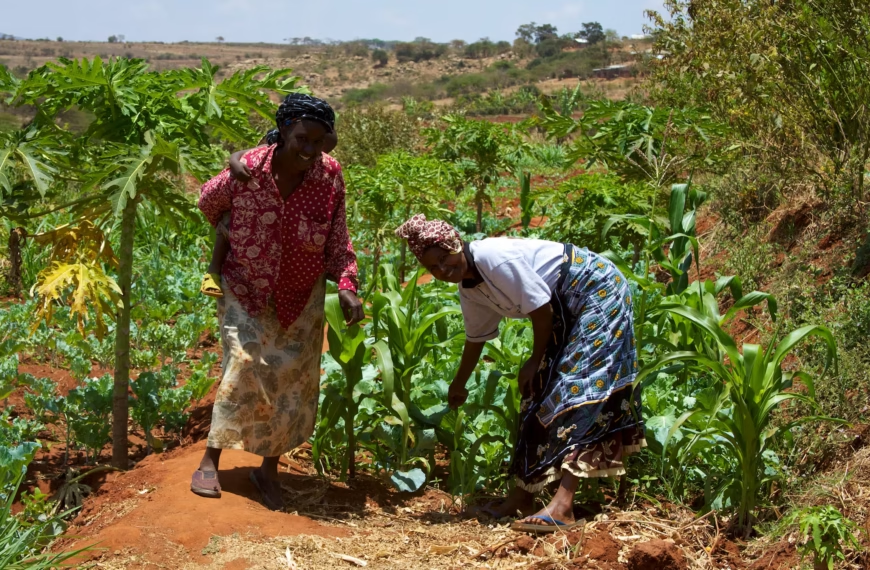
According to officials overseeing the initiative, the new training programs will focus on several priority techniques: alternate wetting and drying (AWD) irrigation, precision fertilizer management, improved seed varieties, and integrated pest management. These practices have been proven to reduce methane emissions, lower input costs, and enhance crop resilience. Demonstration plots and farmer field schools are being established across multiple provinces to support hands-on learning and adoption.
Agriculture experts note that Vietnam’s transition toward low-emission agriculture is particularly timely. The country has committed to achieving net-zero emissions by 2050, and the agriculture sector—responsible for a substantial share of national greenhouse gases—must undergo significant transformation to meet that goal. The Red River Delta initiative serves as a pilot for scaling climate-smart practices nationwide.
In addition to training farmers, the program includes capacity-building for local extension officers and partnerships with technology providers to introduce digital tools for monitoring water use, soil conditions, and greenhouse gas reductions. Early assessments suggest that integrating low-emission practices could reduce methane output from rice fields by 20–30% while maintaining or even enhancing yields.
Policymakers argue that widespread adoption will depend on continued technical support, improved access to inputs, and stronger market incentives for sustainable production. However, they are optimistic that the Red River Delta can become a model for climate-aligned agriculture across Southeast Asia.
As implementation expands, Vietnam aims to position itself as a regional leader in low-emission crop production—demonstrating how targeted training and technology-driven interventions can help balance food security, climate commitments, and farmer livelihoods.


 By
By