

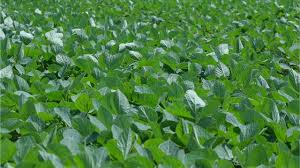
A newly released research analysis has raised alarms over the growing dominance of a small number of crop types within global industrial agriculture, highlighting significant implications for long-term sustainability and food-system resilience. According to the study, worldwide production is increasingly concentrated around a narrow portfolio of staples—particularly maize, wheat, rice, and soy—creating vulnerabilities that could intensify under climate stress and market disruptions.
Researchers note that while high-intensity monoculture systems have historically improved productivity and supported global food supply chains, their expansion now poses measurable ecological and economic risks. Heavy reliance on a few uniform crop varieties reduces genetic diversity, limits ecosystem services, and accelerates soil degradation, pest resistance, and nutrient depletion. These factors collectively undermine the adaptive capacity of agricultural landscapes.
The report also underscores that concentrated crop systems heighten exposure to climate-related shocks. Extreme weather events, shifting precipitation patterns, and emerging plant diseases can cause disproportionate impacts when production is centralized around a limited set of crops. Analysts warn that such structural rigidity may restrict the ability of global food systems to recover quickly from disruptions.
Beyond environmental concerns, the study identifies socio-economic consequences. The dominance of a few industrial crops often marginalizes traditional and locally adapted varieties, affecting smallholder farmers and eroding cultural dietary diversity. Overreliance on global commodity chains can also lead to price volatility, supply bottlenecks, and reduced resilience for import-dependent countries.
To address these risks, researchers advocate for policy interventions aimed at diversifying production landscapes. Recommendations include investing in climate-resilient crop breeding, incentivizing mixed-cropping systems, expanding support for underutilized crops, and strengthening regional seed networks. Enhanced monitoring and data-driven land management could also help balance productivity goals with ecological stability.
The analysis concludes that achieving sustainable, resilient food systems will require a strategic shift away from overly concentrated agricultural models. As climate pressures intensify, fostering crop diversity and ecological balance is becoming an essential pathway to safeguarding global food security.


 By
By











