

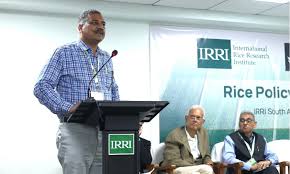
International specialists from the International Rice Research Institute (IRRI) are urging governments to recalibrate policies and strengthen economic incentives to enhance resilience, productivity, and sustainability across the global rice sector. With climate pressures intensifying and input markets increasingly volatile, IRRI researchers warn that current policy frameworks in many major rice-producing regions are no longer sufficient to meet emerging challenges.
According to IRRI, global rice production systems face mounting risks from extreme weather events, water scarcity, soil degradation, and rising fertilizer costs. These pressures threaten yield stability at a time when global demand for rice continues to increase, particularly across Asia and Africa. Experts argue that without adaptive policy measures, the sector could experience deeper disruptions, undermining food security in regions where rice is the primary staple.
The researchers emphasize that policy reform must prioritize climate-resilient crop varieties, improved water management, and investments in digital agriculture. They highlight that advances in biotechnology and breeding—such as submergence-tolerant rice, drought-resilient cultivars, and salt-tolerant strains—can play a transformative role, but only if governments support widespread deployment and farmer adoption.
IRRI experts also call for better-aligned subsidy structures. In several countries, existing incentives favour traditional practices that rely heavily on inputs such as water and fertilizers, often reinforcing inefficiencies. A more targeted approach, they suggest, would shift support toward resource-efficient practices including alternate wetting and drying (AWD), precision nutrient management, and mechanization suited for smallholders.
Additionally, the institute underscores the importance of modernizing extension services, strengthening regional seed systems, and expanding climate advisory platforms. These measures, paired with updated trade policies and risk-management tools, could help buffer producers against market shocks and climate variability.
Trade disruptions—including those linked to shipping instability and fertilizer shortages—have further reinforced the need for resilient production strategies. IRRI argues that coordinated global action is critical, as rice supply chains remain highly interconnected and vulnerable to external shocks.
In their advisory note, IRRI researchers stress that the coming decade will be decisive for the global rice economy. Countries that recalibrate policies now, they assert, will be better positioned to safeguard yields, stabilize prices, and ensure long-term food security.


 By
By











