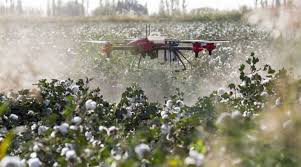
Global farm machinery markets are showing renewed momentum as sales of tractors and mechanized equipment rebound across several major agricultural regions, signaling steady progress in the modernization and digital transformation of farm operations worldwide. Industry analysts report that the recovery in machinery demand reflects both improved farmer sentiment and a rising shift toward technology-driven, efficiency-enhancing solutions.
After a period of volatility linked to supply chain disruptions, high input costs, and geopolitical uncertainty, tractor sales are stabilizing in key markets including North America, Europe, India, and parts of Latin America. Manufacturers note that mid-range and higher-horsepower models are seeing particularly strong demand as farmers invest in equipment capable of managing larger acreage and more complex field operations.
A parallel surge is occurring in specialized mechanized tools—such as planters, harvesters, sprayers, and post-harvest handling systems—as producers pursue greater precision and labour efficiency. Market observers say that labour shortages in several regions have accelerated adoption, with mechanization viewed as essential to maintaining productivity and controlling operational costs.
Technology integration is emerging as a defining feature of the current wave of machinery upgrades. GPS-enabled guidance systems, real-time monitoring tools, IoT-connected sensors, and AI-based decision platforms are increasingly embedded within modern equipment. These innovations help optimize fuel use, reduce input waste, and enhance overall farm management. According to industry insights, digital capabilities are rapidly transitioning from optional add-ons to standard features across major product lines.
In emerging economies, government incentives and credit support programs are also contributing to rising mechanization rates. Subsidized tractor schemes, custom hiring centres, and digital extension services are enabling small and medium farmers to access equipment that was previously unaffordable. Analysts predict that these policy frameworks will play a critical role in sustaining long-term growth in the machinery sector.
However, challenges remain. Persistent price pressures, volatile steel costs, and uneven access to financing continue to limit adoption in some low-income regions. Additionally, the full benefits of mechanization require adequate training and maintenance infrastructure—areas where several countries still face capacity gaps.
Despite these hurdles, global market indicators point to a sustained upward trajectory. As farmers increasingly adopt advanced machinery and smart technologies, the agricultural sector is entering a new phase of modernization aimed at strengthening productivity, resilience, and environmental performance.


 By
By