

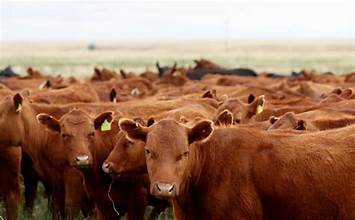
The United States has announced a major $750 million investment to strengthen its fight against the destructive New World screwworm, a parasitic pest that poses a serious threat to livestock health and the agricultural economy. The initiative focuses on building a state-of-the-art facility dedicated to controlling and eventually eradicating the pest through advanced scientific methods.
The New World screwworm (Cochliomyia hominivorax) is a flesh-eating parasite whose larvae infest wounds in animals, causing severe infections and often leading to death if untreated. The pest primarily affects cattle, sheep, and other livestock, leading to significant economic losses for farmers due to reduced productivity, treatment costs, and livestock mortality.
To address this challenge, the US government is investing in a specialized production and research facility that will deploy the Sterile Insect Technique (SIT)—a proven and environmentally friendly pest control method. SIT works by mass-rearing male screwworm flies, sterilizing them using radiation, and releasing them into the wild. When these sterile males mate with wild females, no offspring are produced, gradually reducing and eventually eliminating the pest population.
This approach has been successfully used in the past to eradicate screwworms from North and Central America. However, the parasite continues to exist in some regions, posing a constant risk of reintroduction through animal movement and trade. The new facility will enhance the country’s preparedness and response capacity, ensuring rapid containment in case of outbreaks.
Officials say the investment is critical for protecting the US livestock industry, which contributes billions of dollars annually to the economy. By preventing large-scale infestations, the initiative will help secure farmers’ livelihoods, maintain animal welfare standards, and ensure stable meat and dairy production.
The project also reflects a broader commitment to biosecurity and sustainable agriculture. Unlike chemical pesticides, SIT does not harm beneficial insects or the environment, making it a preferred strategy in modern integrated pest management systems.
Construction of the facility is expected to begin soon, with operations likely to start within the next few years. Once operational, it will serve as a key defense mechanism against one of the most dangerous livestock pests, reinforcing the resilience of the US agricultural sector.


 By
By


 bdjeetbuzz88 says:








