

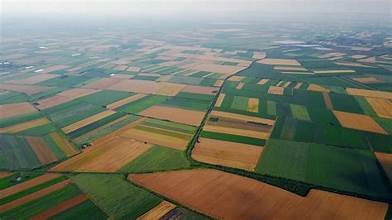
A major new scientific assessment published in Nature Climate Change has brought renewed attention to the environmental impact of global croplands and their contribution to climate change. The study mapped greenhouse gas emissions from agricultural land across different regions of the world and identified fertilizer use, rice cultivation, and peatland farming as some of the largest contributors to agricultural emissions.
Researchers involved in the assessment say the findings provide one of the most detailed global pictures yet of how farming activities are influencing climate systems. The report comes at a time when governments and international organizations are increasing pressure on agricultural sectors to reduce emissions while continuing to meet rising food demand.
According to climate scientists, agriculture remains one of the largest sources of greenhouse gas emissions globally, contributing significantly to methane, nitrous oxide, and carbon dioxide release. These emissions are linked to fertilizer application, soil disturbance, livestock systems, land-use changes, and intensive farming practices.
Fertilizer Use Identified as Major Emission Source
The assessment found that synthetic fertilizer use is among the leading drivers of emissions from croplands. Nitrogen-based fertilizers release nitrous oxide, a greenhouse gas considered far more potent than carbon dioxide in trapping heat within the atmosphere.
Experts say excessive or inefficient fertilizer application not only increases environmental pollution but also contributes to soil degradation and water contamination. In many regions, farmers apply fertilizers heavily to maximize crop yields, often without precise nutrient management practices.
Agricultural scientists are therefore encouraging wider adoption of precision farming technologies, balanced fertilization methods, organic nutrient management, and improved soil testing systems. These approaches can help reduce unnecessary fertilizer use while maintaining productivity.
The study also emphasized the importance of improving fertilizer efficiency in developing countries, where agricultural expansion and rising food demand are increasing dependence on chemical inputs.
Rice Cultivation and Methane Emissions
Rice cultivation was identified as another major contributor to agricultural greenhouse gas emissions. Flooded rice fields create low-oxygen conditions that encourage methane-producing microorganisms, resulting in large methane emissions during the growing season.
Methane is considered one of the most powerful greenhouse gases contributing to global warming. Researchers noted that rice-producing countries across Asia account for a significant share of these emissions due to the scale of paddy cultivation.
Scientists are now promoting climate-smart rice farming techniques such as alternate wetting and drying irrigation systems, direct-seeded rice cultivation, and improved water management practices. These methods can help reduce methane emissions while conserving water resources and maintaining yields.
Peatland Farming Raises Environmental Concerns
The report also highlighted peatland farming as a major environmental concern. Peatlands naturally store enormous amounts of carbon, but when drained for agriculture, they release large quantities of carbon dioxide into the atmosphere.
Several countries have converted peatlands into cropland for producing commodities such as oil palm, vegetables, and other commercial crops. However, researchers warn that continued peatland degradation could significantly accelerate climate change and biodiversity loss.
Environmental experts are calling for stronger protection and restoration of peatland ecosystems to reduce long-term emissions. Sustainable land-use planning and conservation-based agriculture are increasingly being viewed as critical strategies for balancing food production with environmental protection.
Sustainable Agriculture Seen as Key Solution
The scientific assessment reinforces growing international calls for climate-smart agriculture and sustainable farming systems. Policymakers, researchers, and agricultural organizations are emphasizing the need to reduce agricultural emissions without compromising food security.
Experts believe solutions such as regenerative agriculture, precision nutrient management, renewable energy adoption, conservation tillage, agroforestry, and improved irrigation practices can help lower the environmental footprint of farming.
The study also highlights the importance of stronger global cooperation, scientific innovation, and investment in sustainable agricultural technologies. As climate change continues to intensify, balancing food production with environmental sustainability is expected to become one of the defining challenges for global agriculture in the coming decades.
The latest findings published in Nature Climate Change provide a critical reminder that agricultural transformation will play a central role in future climate action efforts worldwide.


 By
By











