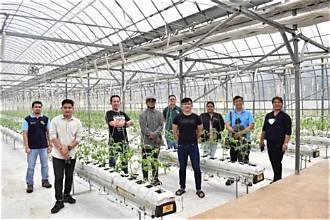
The Philippines is expanding technology-driven agriculture through investments in smart greenhouse facilities, automated cultivation systems and school-based food production initiatives. These efforts aim to improve agricultural productivity, encourage sustainable farming practices and strengthen long-term food security by introducing modern technologies to educational institutions and farming communities.
On November 16, the Department of Science and Technology (DOST) handed over a 60-square-metre smart greenhouse valued at ₱1.15 million to Dingalan Community College in Aurora. The facility is expected to support seedling production, agricultural education and sustainable farming activities.
In addition to the greenhouse facility, planting toolkits were distributed to 10 beneficiary schools to encourage practical agricultural learning and strengthen local food production initiatives.
Smart Greenhouse Facility to Support Agricultural Education
The newly established greenhouse at Dingalan Community College is designed to provide students and local communities with opportunities to learn modern agricultural production techniques.
The facility will support seedling production and demonstrate how controlled growing environments can contribute to more efficient agricultural practices.
Smart greenhouse systems can help farmers manage important crop-growing conditions, including temperature, humidity, irrigation and ventilation. Depending on the technologies installed, automated monitoring and control systems can also reduce manual operations and improve resource-use efficiency.
For educational institutions, these facilities provide practical exposure to modern farming methods and help students develop technical skills relevant to agriculture and agribusiness.
The distribution of planting toolkits to 10 beneficiary schools further extends the initiative by encouraging hands-on agricultural activities and promoting awareness of food production among students.
Korean-Supported Smart Greenhouse Project in Aklan
Alongside the initiative in Aurora, a separate Korean-supported smart greenhouse project in Aklan is promoting automated cultivation, high-value crop production and climate-resilient farming.
The project reflects growing international cooperation in agricultural technology and knowledge exchange.
Smart greenhouse infrastructure can help improve the management of crop-growing conditions and support the production of high-value vegetables and other agricultural commodities.
Automated irrigation, environmental monitoring and controlled growing conditions can help farmers use water and other agricultural resources more efficiently.
Such technologies are particularly relevant in regions exposed to changing weather patterns, excessive rainfall, high temperatures and other climate-related production challenges.
Technology-Driven Agriculture Gains Importance
The expansion of smart greenhouse facilities highlights the increasing role of science and technology in modern agricultural development.
Traditional open-field farming often depends heavily on local weather conditions, seasonal rainfall and environmental factors. Greenhouse cultivation provides an alternative production system in which important growing conditions can be managed more effectively.
Depending on the level of technology, smart greenhouses can incorporate sensors, automated irrigation, climate-control equipment and digital monitoring systems.
These technologies can offer several benefits:
- More controlled crop-growing conditions.
- Efficient use of water and agricultural inputs.
- Improved seedling production and plant establishment.
- Opportunities to cultivate high-value crops.
- Greater protection against certain adverse weather conditions.
- Practical agricultural training for students and young entrepreneurs.
However, successful adoption also requires investment in infrastructure, electricity, maintenance, technical knowledge and market access.
Schools Can Play an Important Role in Food Security
School-based agricultural initiatives can help introduce young people to food production, environmental sustainability and agricultural entrepreneurship.
By providing access to greenhouse facilities and planting toolkits, educational institutions can create opportunities for students to understand crop cultivation through practical experience.
These programmes may also encourage school gardens, local food production and community participation.
Developing agricultural skills among young people is particularly important as countries seek to attract a new generation of entrepreneurs and skilled professionals into the agriculture sector.
Strengthening Climate-Resilient Food Production
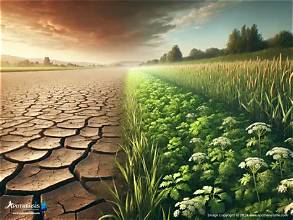
Climate change and unpredictable weather conditions are increasing the need for more resilient agricultural production systems.
Smart greenhouse farming can help reduce exposure to certain external weather conditions by allowing greater control over the growing environment. It can also support year-round production when appropriate infrastructure and management systems are available.
For the Philippines, where agricultural production is vulnerable to typhoons, heavy rainfall and changing climatic conditions, investments in protected cultivation could provide additional opportunities to diversify food production.
Outlook
The Philippines’ investment in smart greenhouse facilities and school-based agricultural programmes highlights its efforts to combine science, technology and education for stronger food security.
The ₱1.15 million greenhouse facility at Dingalan Community College, together with planting toolkit distribution to 10 schools and the Korean-supported initiative in Aklan, represents an expansion of technology-based agricultural learning and production.
The long-term impact will depend on effective facility management, technical training, maintenance and the ability to translate these initiatives into productive agricultural activities.
As smart farming technologies become increasingly important worldwide, such initiatives could help develop skilled agricultural communities, encourage innovation and support more sustainable food production in the Philippines.

 By