

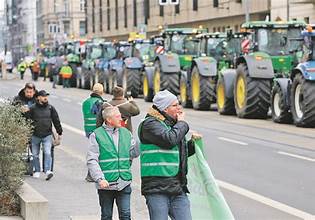
The European Union (EU) is preparing a series of financial aid measures aimed at supporting farmers facing escalating production costs. The proposed package includes subsidies, tax relief, and targeted assistance to offset the impact of rising fuel and fertilizer prices, which have been driven by global conflicts and ongoing supply chain disruptions.
Farmers across Europe have been under increasing financial pressure as the cost of key agricultural inputs continues to climb. Fuel prices have surged due to instability in global energy markets, while fertilizer costs remain volatile because of disruptions in supply and trade. These factors have significantly increased the cost of cultivation, affecting profitability and sustainability for many producers.
To address these challenges, EU policymakers are working on subsidy programs that will directly support farmers’ operational expenses. These may include financial compensation for higher fuel usage, incentives to maintain production levels, and emergency funds for sectors that are particularly vulnerable. In addition, tax relief measures are being considered to ease the financial burden on agricultural businesses and improve cash flow.
The initiative is also expected to prioritize small and medium-scale farmers, who are often the most affected by cost increases. By providing targeted support, the EU aims to prevent farm closures, protect rural livelihoods, and ensure the continuity of food production across member states.
Another important aspect of the plan is maintaining stability in the food supply chain. Rising input costs can lead to reduced agricultural output, which in turn may cause food shortages and price increases. By supporting farmers financially, the EU hopes to stabilize production levels and avoid disruptions in food availability for consumers.
The subsidy plans are being developed in the context of broader economic and geopolitical challenges. Conflicts in key regions have disrupted trade flows and contributed to uncertainty in global markets. These disruptions have had a cascading effect on agriculture, highlighting the vulnerability of food systems to external shocks.
In addition to immediate financial relief, the EU is also focusing on long-term resilience. Policymakers are encouraging investments in sustainable farming practices, energy efficiency, and alternative fertilizers to reduce dependence on imported inputs. Such measures are expected to strengthen the agricultural sector against future crises.
Experts believe that timely intervention will be crucial in preventing further strain on the farming community. Without adequate support, many farmers may be forced to cut production or exit the sector, which could have lasting consequences for food security and rural economies.
As discussions continue, the European Union’s proposed subsidies signal a strong commitment to safeguarding its agricultural sector. The final outcome of these measures will play a key role in determining how effectively European farmers can navigate the current period of economic uncertainty and maintain stable food supplies


 By
By











