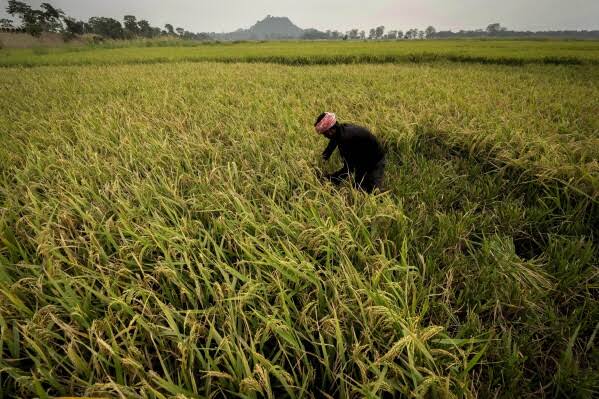
The Punjab Agricultural University (PAU) has issued a precautionary alert to rice farmers across the state, urging them to remain vigilant against rice dwarfing disease during the ongoing 2025 kharif season. The disease, triggered by the Southern Rice Black-streaked Dwarf Virus (SRBSDV), poses a serious threat to paddy yields if not detected and managed in time.
According to PAU, the virus, transmitted by the whitebacked planthopper (WBPH), had caused significant crop damage in 2022, particularly in districts such as Fatehgarh Sahib, Patiala, Hoshiarpur, Ludhiana, Pathankot, SAS Nagar, and Gurdaspur. The infection results in severe stunting of rice plants, characterized by narrow, upright leaves, poor shoot and root development, and drastic reduction in plant height often to a third of normal size. In severe cases, plants may wither and die, leading to major yield losses.
Early detection and immediate action are key, said PAU officials. Farmers observing signs of stunted or poorly developing rice plants are advised to report the symptoms promptly to their nearest Krishi Vigyan Kendra (KVK) or directly contact PAU experts for guidance.
Dr. P.S. Sandhu, Head of the Department of Plant Pathology at PAU, confirmed that university scientists are actively monitoring rice nurseries and fields for signs of SRBSDV infection. “As of now, no cases have been reported in the monitored areas this season. However, due to the previous outbreak, farmers should not lower their guard,” he emphasized.
Highlighting the role of the whitebacked planthopper (WBPH) in transmitting the virus, Dr. K.S. Suri, Principal Entomologist at PAU, recommended that farmers conduct weekly field inspections, especially in nurseries and early-stage paddy fields. He advised using the “tap-and-check” method gently tilting the base of the plants to dislodge any hidden insects, which can then be seen floating on the water surface.
If WBPH is detected, PAU recommends timely but judicious use of approved insecticides, including:
- Pexalon 10 SC (triflumezopyrim): 94 ml/acre
- Ulala 50 WG (flonicamid): 60 g/acre
- Osheen/Dominant/Token 20 SG (dinotefuran): 80 g/acre
- Imagine 10 SC / Viola 10 SC (fluprimin): 300 ml/acre
- Orchestra 10 SC (benzpyrimoxan): 400 ml/acre
- Chess 50 WG (pymetrozine): 120 g/acre
Sprays should be applied using 100 litres of water per acre, targeting the base of the rice plants with flat-fan or hollow-cone nozzles for optimal coverage. Dr. Suri cautioned against overuse or indiscriminate spraying of pesticides, which could lead to pest resistance and harm to beneficial organisms.
Adding to the advisory, Dr. M.S. Bhullar, Director of Extension Education at PAU, noted that zinc deficiency can produce symptoms similar to SRBSDV, such as stunted growth and reduced tillering. He urged farmers to seek expert advice for accurate diagnosis and apply appropriate nutrient management practices to maintain plant health.
Reassuring the farming community, Dr. A.S. Dhatt, Director of Research at PAU, stated that the university is fully equipped to promptly diagnose SRBSDV infections. He also mentioned that PAU scientists are monitoring weeds and alternate host plants that may carry the virus, helping prevent its further spread. Farmers are encouraged to stay informed through PAU’s official advisories and bulletins, which provide timely updates on disease surveillance and integrated pest management strategies


 By
By