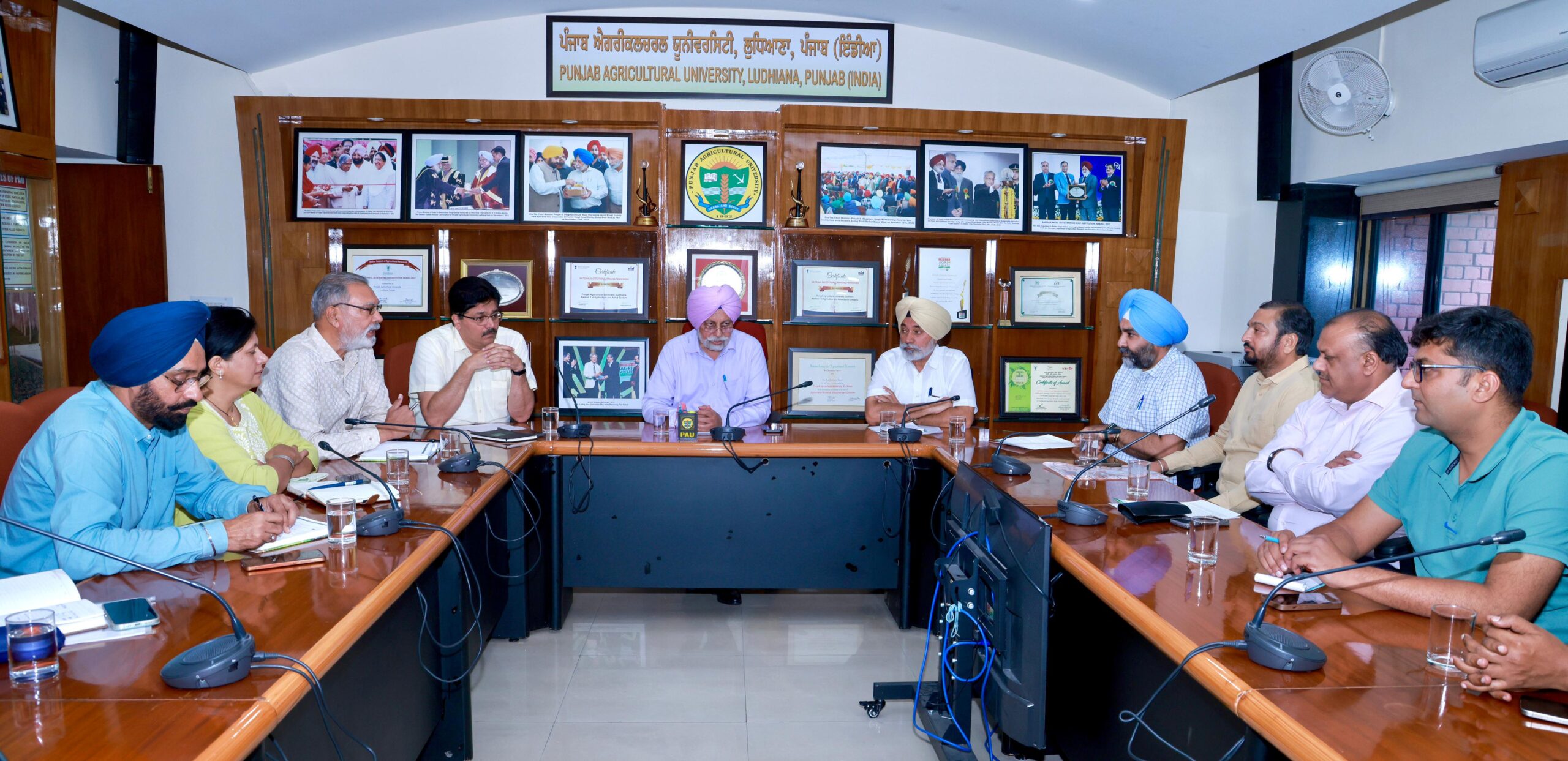
In a significant step toward strengthening Punjab’s agri-processing sector, Punjab Agricultural University (PAU), Ludhiana, held a high-level meeting with a delegation from the Punjab Roller Flour Millers Association to chart out a roadmap for transforming the state’s wheat value chain. The delegation was led by Association President Mr. Ajay Kumar Jindal and General Secretary Mr. Dinam Sood, and was received by Dr. Satbir Singh Gosal, Vice-Chancellor, PAU.
The meeting was attended by senior university officials including Director of Research Dr. Ajmer Singh Dhatt, along with wheat breeders, food technologists, nutritionists, and other scientists. Discussions centered around building a robust, value-driven ecosystem for wheat that connects research, processing, and markets.
Representing nearly 60 flour mills that collectively consume approximately 15 lakh metric tonnes of wheat annually, the Association proposed a multifaceted partnership with PAU. Their proposal included access to wheat varietal data, laboratory testing support, concessional agro-product testing, and the establishment of a School of Milling at PAU. They emphasized the critical need for an industry-academia partnership to enhance innovation, quality processing, and long-term sustainability.
A key focus of the meeting was to transition from generic wheat procurement to a more structured system based on specialized, value-added wheat varieties. The Association expressed interest in sourcing locally developed PAU wheat varieties specifically suited for different end uses such as high-gluten wheat for bread, soft-grain wheat for biscuits, and whole wheat for chapatis. They proposed introducing these varieties on at least 5% of Punjab’s wheat acreage to unlock premium markets for farmers.
Vice-Chancellor Dr. Gosal highlighted PAU’s extensive legacy in crop research, with over 950 crop varieties developed, including more than 225 released nationally. He shared that PAU has recently developed niche wheat varieties like PBW Zinc 2 and PBW 1Zn (zinc-enriched), PBW RS 1 (high in resistant starch), and end-use specific varieties such as PBW 1 Chapati and PBW 1 Biscuit. He assured the Association of PAU’s full support in bridging the gap between agricultural innovation and food processing.
Dr. A.S. Dhatt, Director of Research, emphasized the alignment of this collaboration with PAU’s broader research vision. “Matching wheat varietal traits with industry requirements is the future,” he said. He welcomed the proposal for a dedicated School of Milling, which he noted would enhance skill development, create employment opportunities, and add value at the farm level.
Mr. Jindal appreciated PAU’s pivotal role in wheat varietal innovation and reaffirmed the flour milling industry’s commitment to promoting locally developed varieties. He called for a long-term strategy that integrates varietal development, chemical profiling, field trials, and milling performance to ensure benefits for both farmers and processors.
Mr. Sood addressed the operational challenges faced by the flour milling industry, particularly in complying with FSSAI norms. He proposed that PAU offer agro-product testing at concessional rates to encourage wider adoption of quality standards. He also assured the university of industry support in setting up the proposed Milling School, including machinery and equipment assistance.
Scientists from PAU acknowledged the immense potential of this industry-university partnership and its ability to generate real value for Punjab’s agricultural and processing sectors. The meeting concluded with a mutual agreement to form an institutional framework to take the collaboration forward. Dr. Vishal Bector, Associate Director (Institution Relations), moderated the interaction.
This strategic alliance aims to create long-term gains in wheat quality, nutrition, employment, and farmer income, reinforcing PAU’s role as a leader in agricultural innovation.


 By
By